
Quick Overview:
Combining foundations, walls, columns, beams, and slabs under one subcontractor can reduce scheduling conflicts, repeated mobilization, and scope gaps. But larger packages aren’t always better. GCs should weigh project complexity, subcontractor experience, pricing, and construction risks.
General contractors often divide concrete construction into separate scopes when preparing bids. One subcontractor may handle the foundations, another the structural walls, and another the columns, beams, or slabs. This approach can attract more bidders and make individual prices easier to compare. But does it always lead to a better project?
Not necessarily.
Foundations, walls, columns, beams, and slabs are often connected, both structurally and in the construction schedule. When one contractor finishes late, the next crew may have to wait. And when responsibilities overlap, even a small issue can turn into a costly delay.
Combining related work into one structural concrete package can help reduce these problems. Still, it’s not the right choice for every project.
For general contractors, the decision comes down to structural complexity, scheduling, subcontractor capabilities, and total project cost. The lowest individual bids don’t always add up to the lowest overall construction cost.
What Does It Mean to Package Structural Concrete Work Together?
Packaging structural concrete work means placing several related construction activities under one subcontract instead of awarding each activity separately.
The goal is to give a qualified contractor responsibility for connected portions of the structure, making it easier to plan the work and coordinate each stage.
Common Components of a Structural Concrete Package
A combined package may include:
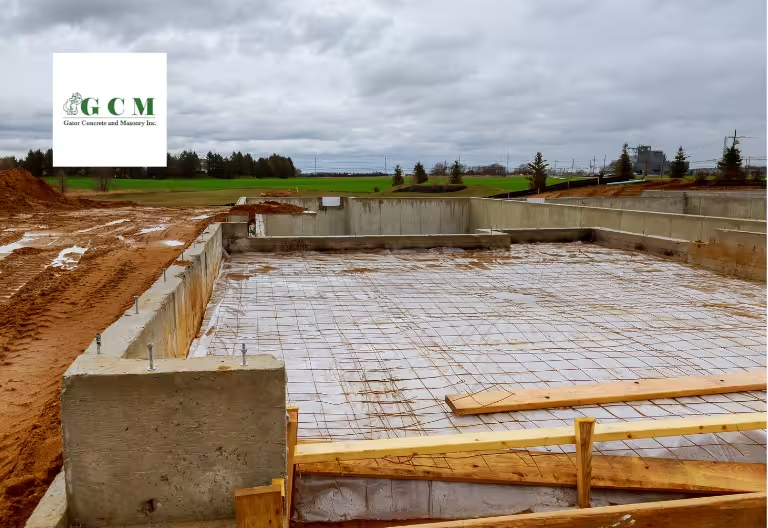
- Foundations: Footings, grade beams, foundation walls, and other elements that transfer building loads into the ground.
- Structural walls: Reinforced concrete walls and load-bearing concrete masonry unit (CMU) walls, when included in the contract.
- Columns: Vertical members that support beams, slabs, and other parts of the building.
- Beams: Horizontal structural members that carry loads between columns, walls, and supports.
- Slabs: Slab-on-grade, elevated concrete slabs, and other structural floor systems.
These components often require connected construction activities, including formwork, reinforcing steel, concrete placement, curing, and inspections.
Combined vs. Separate Concrete Subcontracts
Under separate contracts, each subcontractor manages an assigned portion of the work. The GC must coordinate their schedules, access, materials, and responsibilities.
With a combined package, one subcontractor manages several related components. That can make communication easier, especially when the work follows a continuous sequence.
However, combining scopes doesn’t mean every structural element must be performed by the same company. Certain systems may still require specialty contractors.
The point is to group work in a way that makes sense for the project and the contractors available.
When Does Combining Structural Concrete Work Make the Most Sense?
A GC should consider combining foundations, walls, columns, beams, and slabs when the work is closely connected, the schedule is tight, and a qualified subcontractor can manage the full package.
Several project conditions make this approach particularly useful.
1. When Structural Components Depend on One Another
Concrete construction usually follows a planned sequence.
Footings must be completed before many foundation walls or columns can proceed. Walls and columns may need to reach specified strength before supporting additional construction loads. Beams and elevated slabs often depend on completed supporting elements.
When different subcontractors handle each stage, the GC must manage every transition.
Consider a project where one contractor builds the foundations and another installs the columns. If anchor bolts, reinforcing steel, or concrete elevations don’t match the approved details, the next crew may be unable to begin.
A combined package can reduce these handoffs by placing connected work under one management team.
It doesn’t eliminate construction problems, but it can make them easier to identify and resolve.
2. When the Project Has a Tight Construction Schedule
Every construction schedule has activities that affect the work that follows.
Structural concrete is often among them.
A delay in foundation construction may push back wall installation, framing, mechanical work, and other trades. When several subcontractors are involved, adjusting the schedule can become complicated.
A contractor managing multiple structural concrete activities may be able to coordinate labor, equipment, formwork, and concrete deliveries across different stages.
For example, crews may be scheduled to move from completed foundation work into the next available concrete operation without waiting for another subcontractor to mobilize.
That continuity can be valuable on projects with demanding completion dates.
Of course, the combined contractor must have enough crews and equipment to support the schedule. Awarding more work to a contractor that lacks capacity can create the very delays the GC hoped to avoid.
3. When the Building Has Complex Structural Connections
Some structures require close coordination between reinforced concrete walls, columns, beams, and elevated slabs.
These projects may involve congested reinforcing steel, embedded plates, sleeves, construction joints, and detailed formwork.
A small error in one component can affect several others.
For instance, reinforcing steel extending from a foundation into a column must match the structural details. Incorrect placement may require review and an approved correction before construction continues.
When related work is managed under one package, the contractor can plan these connections across multiple concrete placements.
This can improve communication between crews and help reduce mistakes at the points where different structural elements meet.
4. When One Qualified Subcontractor Can Perform the Complete Scope
This is one of the most important considerations.
A combined package only makes sense when the subcontractor has the experience, workforce, equipment, and financial capacity to complete the assigned work.
A company experienced in slab-on-grade construction, for example, may not have the same capabilities as one that regularly builds complex elevated concrete structures.
Before combining scopes, GCs should review the contractor’s previous projects, available crews, safety practices, and ability to manage the proposed schedule.
Ask practical questions. Has the contractor completed similar work? Can it support several concrete operations? Does it have the necessary supervision?
A larger contract isn’t automatically a better contract.
5. When Reducing Trade Coordination Is a Priority
Every additional subcontractor creates another point of coordination.
That means more scheduling discussions, site access arrangements, inspections, and opportunities for disagreements over responsibilities.
With a combined structural concrete package, the GC may have one primary contact for several connected activities.
If a field condition affects both a foundation wall and the slab above it, for example, there may be fewer parties involved in planning the response.
This can make day-to-day project management more straightforward, particularly when structural work involves frequent coordination.
How Can a Combined Concrete Package Benefit General Contractors?
Combining related structural concrete scopes can offer several practical advantages. The benefits, however, depend on how the package is prepared and who performs the work.
Better Construction Scheduling
Fewer transitions between subcontractors can make structural work easier to plan.
One contractor may coordinate concrete placements, equipment use, and crew assignments across several phases.
This can reduce waiting periods between connected activities, provided the contractor has sufficient resources.
Clearer Scope Responsibilities
Scope gaps are a common source of construction disagreements.
Who installs the embedded items? Who prepares a construction joint? Who corrects an elevation that affects the next concrete placement?
When multiple subcontractors are involved, these questions can become complicated.
A combined package can reduce overlapping responsibilities, especially when the contract clearly identifies included work.
Potential Cost Savings
Combining concrete scopes may reduce costs associated with repeated mobilization, duplicate equipment setups, additional supervision, and labor downtime.
Consider two subcontractors that each need concrete placement equipment at different stages. Depending on the project, coordinating those activities under one contractor may reduce setup and mobilization expenses.
But savings aren’t guaranteed.
A larger subcontractor may price additional risk into its proposal. Limited competition may also result in higher bids.
GCs should compare the complete project cost, not simply assume that combining work will be cheaper.
More Consistent Quality Control
A single contractor managing connected concrete activities may use more consistent construction methods and inspection procedures.
The same management team can coordinate reinforcing steel, formwork, placement, and curing requirements across several structural components.
This also helps establish responsibility when workmanship issues need correction.
Still, quality depends on proper supervision, approved construction documents, required inspections, and the contractor’s actual performance.
When Is It Better to Keep Concrete Scopes Separate?
Combining concrete work isn’t always the best approach. Some projects benefit from dividing the work among contractors with different areas of expertise.
When Specialized Work Requires Different Expertise
Post-tensioned slabs, complex elevated structures, and specialized forming systems may require contractors with specific training and experience.
A subcontractor that performs excellent foundation and CMU work may not be equipped for every type of structural concrete system.
In these situations, separate specialty packages can provide better technical support and reduce construction risk.
When Project Phases Are Far Apart
Some projects have long gaps between foundation construction and later structural work.
For example, a development may complete foundations during one phase and delay vertical construction until a later date.
Separate contracts can make sense when the work is not scheduled to proceed continuously.
When Combining Scopes Limits Competitive Bidding
A large structural concrete package may attract fewer qualified bidders.
Smaller subcontractors might offer competitive pricing for foundations, walls, or slabs but lack the resources to bid on everything together.
If combining the work significantly reduces competition, the GC should consider whether the expected coordination benefits justify the change.
When a Single Contractor Creates Too Much Risk
Placing a large portion of the structural schedule under one subcontractor creates a greater dependence on that company.
If the contractor experiences labor shortages, financial problems, or equipment delays, several parts of the project may be affected.
That’s why contractor capacity matters just as much as pricing.
The best approach balances scheduling, competition, technical ability, and risk.
What Should a GC Review Before Combining Structural Concrete Scopes?
Before issuing bid invitations, GCs should examine the construction documents and determine how the structural work fits together.
Review the Structural Drawings and Specifications
Start with the approved structural drawings and applicable specifications.
Identify the foundations, walls, columns, beams, and slabs included in the project. Review their reinforcing requirements, dimensions, elevations, and connections.
Pay attention to details that involve more than one component.
Foundation plans, slab plans, framing plans, beam schedules, and wall sections can help identify these relationships.
The GC should also note specialty systems and work that may fall outside a typical concrete subcontract.
Evaluate Construction Sequence and Schedule
Look at when each structural activity must begin and finish.
Are foundations followed immediately by columns and walls? Will the slab be placed shortly afterward? Are there long gaps between phases?
Closely connected activities may benefit from combined management.
The GC should also review site access, equipment needs, inspection requirements, and potential scheduling conflicts.
Confirm Subcontractor Capabilities
Review each bidder’s experience with projects of similar size and complexity.
Consider available labor, equipment, supervision, safety procedures, and quality control practices.
For larger projects, financial capacity and bonding requirements may also influence the decision.
A contractor should be evaluated against the actual scope, not simply its ability to submit a competitive price.
Compare Complete Project Costs
A useful bid comparison goes beyond subcontract totals.
Consider mobilization, supervision, equipment, coordination, exclusions, schedule impacts, and potential change orders.
A combined proposal might have a higher initial price than the sum of several individual bids but still offer advantages in project coordination.
The reverse can also be true.
A clear comparison helps the GC understand what each option really costs.
How Should a GC Structure a Combined Concrete Bid Package?
Even when several scopes are combined, the bid documents must explain exactly what the contractor is expected to provide.
Clearly Define the Scope of Work
The package should identify all applicable construction activities, which may include foundation excavation and preparation, footings, grade beams, structural walls, columns, beams, slabs, formwork, reinforcing steel, concrete placement, and finishing.
Curing requirements and coordination for testing and inspections should also be addressed.
Equally important, identify what is excluded or provided by others.
For example, excavation, reinforcing steel supply, concrete pumping, and embedded items should not be left open to interpretation.
A clear scope reduces the chance of disputes after the contract is awarded.
Provide Complete Plans and Specifications
Bidders need the latest available structural drawings and relevant architectural plans.
They also need concrete strength requirements, reinforcing details, site information, access restrictions, and the expected construction schedule.
If important details are missing, bidders may make different assumptions.
That makes their proposals harder to compare.
Establish Clear Bid Expectations
Ask subcontractors to provide an itemized breakdown, even when bidding on a combined package.
Separate pricing for foundations, walls, columns, beams, and slabs can help the GC understand where costs are concentrated.
Require bidders to identify exclusions, allowances, assumptions, and mobilization requirements.
This gives the GC a clearer basis for comparing proposals and evaluating changes later.
Why Early Concrete Subcontractor Involvement Matters
Waiting until bids are submitted to discuss structural concrete packaging can lead to unnecessary questions and revisions.
Early conversations with qualified subcontractors can help GCs identify problems before pricing begins.
Identifying Potential Scope Gaps
An experienced concrete subcontractor may notice unclear responsibilities involving excavation, reinforcing steel, embedded items, or concrete placement.
Raising these questions early allows the GC and design team to clarify the documents before bids are finalized.
Improving Construction Sequencing
Subcontractor input can also help the GC understand how the planned concrete operations may work in the field.
Equipment access, formwork removal, concrete deliveries, and inspection timing can all affect the sequence.
Discussing these conditions during preconstruction can help produce a more practical schedule.
Making Bid Comparisons More Accurate
When bidders receive clear information, they are more likely to price the same work.
That means fewer inconsistent exclusions and fewer assumptions hidden inside proposals.
For the GC, the result is a more useful bid comparison and a better basis for selecting the right contractor.
Working With an Experienced Structural Concrete and Masonry Contractor
Choosing how to package concrete work starts with understanding the project and finding subcontractors with the right experience.
At Gator Concrete and Masonry Inc., we bring more than 25 years of experience in foundation and CMU construction. Our work includes concrete foundations, concrete and block walls, grading, and excavation throughout the Tampa, Florida area.
We understand how site preparation, ground conditions, and foundation construction can affect the work that follows.
For general contractors preparing bid packages, reviewing the drawings and defining responsibilities early can help prevent confusion later.
Whether your project involves foundation construction, concrete walls, or related masonry work, we’re ready to discuss the requirements and determine where our services fit.
Frequently Asked Questions
Is It Cheaper to Combine Foundations, Walls, Columns, Beams, and Slabs Into One Contract?
It can be, but not always. Combining related work may reduce repeated mobilization, equipment setup, and coordination costs. However, a larger package may also limit competition or require a contractor to include additional risk in its pricing. GCs should compare complete project costs before deciding.
2. Can One Concrete Subcontractor Handle All Structural Concrete Work?
Some subcontractors have the experience, workforce, and equipment to manage complete structural concrete packages. Others specialize in foundations, walls, slabs, or particular structural systems. The GC should confirm that the contractor has successfully completed similar work before awarding a combined contract.
3. What Are the Risks of Splitting Structural Concrete Work Between Multiple Subcontractors?
Separate contracts can create scheduling conflicts, repeated mobilization costs, and disagreements over scope boundaries. Problems may also arise when work completed by one contractor affects the next contractor’s activities. Clear bid documents, inspections, and coordination can help manage these risks.
4. When Should a GC Decide How to Package Structural Concrete Work?
Ideally, during preconstruction or bid planning. The GC should review the structural drawings, construction schedule, site conditions, and available subcontractors before issuing invitations to bid. Making this decision early gives bidders time to understand the scope and prepare accurate proposals.
Conclusion: Choose the Package That Works for the Project
Foundations, walls, columns, beams, and slabs are closely connected, but that doesn’t mean every project needs one subcontractor to handle them all.
For some projects, a combined structural concrete package can simplify scheduling, reduce handoffs, and make responsibilities easier to manage. For others, separate contracts provide better access to specialty skills, more competitive pricing, or greater flexibility.
The important thing is to evaluate the complete project.
Review the drawings. Understand the construction sequence. Check subcontractor capabilities. And compare the total costs and risks of each approach.
The best concrete package isn’t always the biggest or the cheapest. It’s the one that gives the GC a clear scope, a workable schedule, and a qualified contractor for the job.
Planning a Concrete Construction Project in Tampa?
With more than 25 years of experience, Gator Concrete and Masonry Inc. works with general contractors on concrete foundations, concrete and block walls, grading, and excavation.
Whether you’re preparing a bid package or reviewing the concrete work required for an upcoming project, our team can discuss your plans and help determine how our services fit your construction needs.
Contact Gator Concrete and Masonry Inc. today to discuss your project and request a concrete construction bid.