
Quick Overview:
Structural concrete mobilization can take several days to several weeks after award. Drawings, site readiness, crews, materials, equipment, RFIs, inspections, and trade coordination all affect the start. Early planning helps contractors mobilize faster and keep concrete work moving.
Winning the bid is a major step. But for a structural concrete contractor, the work between contract award and showing up on the jobsite can be just as important as the work that follows.
General contractors and owners are often working against tight schedules. Once the concrete package is awarded, there may be an expectation that crews can arrive almost immediately, set forms, place reinforcing steel, and start pouring concrete.
Sometimes that can happen quickly. Other times, it shouldn’t.
Structural concrete mobilization involves much more than sending a crew, a few trucks, and equipment to the site. Drawings need to be reviewed, the scope confirmed, materials ordered, crews scheduled, equipment secured, and site conditions checked. RFIs, submittals, inspections, and other trades can also affect when fieldwork actually begins.
So, how quickly can a structural concrete contractor mobilize after award?
The quick answer is anywhere from several days to several weeks. Project size, site readiness, manpower, materials, equipment, drawings, permits, and coordination all play a role.
What Does “Mobilization” Mean for a Structural Concrete Contractor?
Mobilization is often thought of as the day equipment and workers arrive. In reality, it starts earlier.
Mobilization Starts Before the Crew Arrives
Once a structural concrete package is awarded, the contractor can begin working through the details needed to turn the plans into fieldwork.
That can include:
- Contract and scope review
- Construction drawing review
- Schedule coordination
- Crew planning
- Equipment allocation
- Material procurement
- Formwork planning
- Submittals and RFIs
- Site logistics
A lot can be happening even when the jobsite looks quiet.
For example, reviewing the structural drawings may uncover a foundation detail that needs clarification. Reinforcing steel quantities may need to be confirmed. Formwork requirements may affect how many carpenters are needed. Pump access may need to be coordinated with the general contractor.
These aren’t small details. They’re part of getting the job ready to move without unnecessary stops once fieldwork begins.
Mobilization vs. Starting Concrete Placement
Being mobilized doesn’t necessarily mean you’re ready to pour concrete.
Before a footing, foundation, wall, slab, or structural element can be placed, several activities may need to happen first.
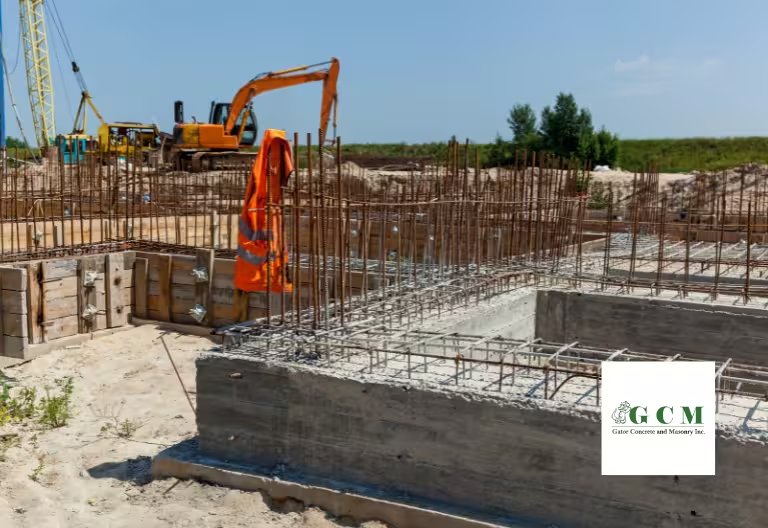
There may be layout work, excavation, grading, soil preparation, reinforcing steel installation, formwork, embedded items, anchor bolts, sleeves, underground work, inspections, and other required steps.
Think of mobilization as getting the operation moving. Concrete placement comes later in that sequence.
What Is a Realistic Mobilization Timeline After Award?
There isn’t one standard answer. We’ve seen how much project conditions can change the amount of preparation needed.
A small, straightforward foundation package on a ready site is very different from a multi-story concrete project involving walls, beams, elevated decks, and shoring.
Fast-Track Mobilization
Under favorable conditions, mobilization could begin within several days of award.
That’s more realistic when:
- Final drawings are available
- The scope is clearly defined
- Site access is ready
- Materials are readily available
- Crews are available
- Required equipment can be scheduled
- There are few or no unresolved RFIs
- Preceding trades have completed their work
In other words, the pieces are already lined up.
Even then, moving quickly doesn’t mean skipping normal reviews or required inspections. It means the project was prepared well enough that those steps don’t become major roadblocks.
Typical Mobilization
For many structural concrete projects, one to several weeks may be more realistic.
There’s coordination happening between the general contractor, concrete contractor, structural engineer, suppliers, inspectors, and other trades. Materials need to arrive when they’re needed, not weeks too early and certainly not two days too late.
Crews also need to be scheduled around existing commitments.
A good structural concrete contractor can’t always pull a crew from an active project just because another project received an award. Doing that could create problems on both jobs.
Complex or Large Structural Projects
Larger foundations, structural walls, beams, elevated slabs, and multi-story structures usually require more planning.
Special forming systems may be needed. Shoring may need engineering or coordination. Reinforcing steel packages can be extensive. Concrete pumps and cranes may need to be reserved.
Crew requirements can also change from one phase to another.
A project might need a smaller crew during layout and initial foundation preparation, then considerably more workers once forming, reinforcing, and concrete placement ramp up.
That’s why a realistic mobilization plan should consider the whole concrete sequence, not just the first day onsite.
7 Factors That Determine How Quickly a Concrete Contractor Can Mobilize
1. Completeness of the Construction Documents
Good drawings make a difference.
Final structural drawings give the contractor something reliable to plan around. Preliminary drawings can still be useful for early budgeting and planning, but major changes later may affect material quantities, labor, equipment, and schedule.
Missing details and conflicts between architectural and structural plans can slow preparation.
Early plan review helps catch those issues before crews are standing around waiting for answers.
That’s one reason we encourage getting the concrete contractor involved early. A question discovered during preconstruction is usually easier to deal with than the same question discovered while forms are being built.
2. Site Readiness
You can have the crew ready and still have nowhere productive to put them.
Before mobilization, contractors need to know whether the site has:
- Proper access
- Completed clearing
- Required excavation or grading
- Stable working surfaces
- Material staging areas
- Concrete truck access
- Pump access
- Temporary utilities or services when required
Florida conditions can make site preparation especially important. Heavy rain and saturated ground can quickly change access and working conditions.
The site needs to support the work that’s coming.
Sending workers and equipment too early can simply create downtime, congestion, and extra cost.
3.Labor and Crew Availability
Structural concrete work takes skilled labor.
Formwork crews, reinforcing crews, finishers, equipment operators, supervisors, and concrete placement crews may all be involved at different points.
The crew also needs to match the size of the project.
Putting too few workers on a large concrete package can hurt the schedule. Putting too many people onsite before enough work is available isn’t efficient either.
Good mobilization means bringing in the right people at the right stage.
4. Material Lead Times
Materials are another major piece of the puzzle.
Depending on the project, the contractor may need to coordinate:
- Reinforcing steel
- Approved concrete mix designs
- Formwork materials
- Embedded items
- Anchor bolts
- Vapor barriers
- Specialty concrete products
Some materials may be readily available. Others require fabrication or approval before ordering.
Reinforcing steel is a good example. Large or complex reinforcing packages may require detailing, review, fabrication, and delivery scheduling.
If a critical material isn’t available, sending a full crew doesn’t make the project move faster.
5. Equipment Requirements
Not every structural concrete project needs the same equipment.
Depending on the scope, equipment could include:
- Excavators
- Loaders
- Concrete pumps
- Cranes
- Compaction equipment
- Formwork systems
- Shoring systems
- Concrete finishing equipment
Equipment has to be available, transported, staged, and sometimes shared between phases of the project.
A concrete pump also needs somewhere to set up. Cranes need proper access and operating space. Excavators need room to work without interfering with other trades.
These details need to be considered before the equipment rolls through the gate.
6. Submittals, RFIs, and Approvals
Paperwork can affect fieldwork more than many people expect.
Before certain work proceeds, the project may require approved:
- Concrete mix designs
- Reinforcing details
- Shop drawings
- Product data
- Engineer clarifications
- Material submittals
RFIs can be especially important.
One unanswered detail may affect reinforcing, forming, embeds, or dimensions. If that detail controls a major section of the work, the contractor may have little choice but to wait for clarification.
This is why quick communication between the contractor, GC, architect, and engineer can have a direct effect on the schedule.
7.Overall Project Schedule and Trade Coordination
Concrete doesn’t happen in isolation.
Excavation may need to finish first. Underground plumbing or electrical work may cross areas scheduled for concrete. Inspections may need to happen before placement. Survey and layout work may also be required.
Then there are the trades following concrete.
The structural concrete contractor needs to understand those relationships, because a delay in one area can ripple through several others.
Good scheduling looks beyond a requested mobilization date. It looks at what needs to happen before, during, and after that date.
What Happens Immediately After a Structural Concrete Package Is Awarded?
A simplified sequence may look something like this:
Award → Scope Confirmation → Plan Review → RFIs/Submittals → Procurement → Crew & Equipment Scheduling → Site Coordination → Mobilization → Field Preparation → Concrete Placement
- Award: The contractor receives formal notice that the concrete package has been awarded.
- Scope Confirmation: Responsibilities are checked against the proposal, drawings, specifications, and contract documents.
- Plan Review: The team reviews the latest drawings and details, looking for changes, conflicts, and questions.
- RFIs and Submittals: Required questions and product information are sent for review.
- Procurement: Reinforcing steel, formwork, embeds, anchor bolts, and other required materials can be ordered or scheduled.
- Crew and Equipment Scheduling: Labor and equipment are assigned based on the planned start and sequence.
- Site Coordination: Access, staging, predecessor work, survey points, inspections, and site conditions are confirmed.
- Mobilization: Crews, tools, materials, and equipment begin moving onto the site.
- Field Preparation: Layout, excavation, grading, forming, reinforcing, embeds, and other required preparation can proceed.
- Concrete Placement: Once everything is ready and required inspections are complete, placement can begin. That sequence explains why “award today, pour tomorrow” usually isn’t a realistic way to look at structural concrete work.
What Can General Contractors Do to Speed Up Mobilization?
Contractors can’t control every delay, but good preparation from the GC can remove a lot of friction.
Provide Complete Plans Early
Give the structural concrete contractor the latest architectural and structural drawings as early as possible.
More importantly, clearly identify revisions.
Working from an outdated plan set can create quantity changes, incorrect layouts, rework, and procurement problems.
Define the Scope Before Award
Scope gaps create delays.
Who handles excavation? Reinforcing steel? Formwork? Pumping? Embeds? Finishing? Waterproofing? Backfill?
The clearer those responsibilities are before award, the faster the contractor can turn the awarded package into a working plan.
Share the Construction Schedule
Don’t provide only a requested mobilization date.
Provide milestone dates.
For example, when are footings expected? Foundation walls? Slabs? Structural walls? Elevated decks?
Those milestones help the concrete contractor plan manpower, equipment, deliveries, and formwork around the actual needs of the project.
Resolve RFIs Quickly
A seemingly small RFI can hold up a large section of work.
Fast, clear responses keep preconstruction moving and reduce the chance of discovering unanswered questions in the field.
Make Sure the Site Is Actually Ready
This sounds obvious, but it’s worth saying.
Don’t schedule a concrete crew simply because the calendar says it’s time.
Confirm that predecessor work is complete and the area can actually support productive concrete operations.
Why the Fastest Mobilization Is Not Always the Best Mobilization
Getting workers onsite quickly looks good on a schedule. Getting them onsite before the project is ready doesn’t.
Poor planning can lead to:
- Missing materials
- Crew downtime
- Rework
- Formwork conflicts
- Delayed inspections
- Concrete placement interruptions
Structural concrete isn’t a good place for guesswork.
Once concrete is placed, correcting a mistake can be far more difficult and expensive than addressing it before the pour.
The better goal is fast but controlled mobilization.
Prepare early, answer questions, line up resources, confirm site conditions, then move.
That’s usually much better for the schedule than rushing a crew onsite just to say mobilization has started.
Early Contractor Involvement Can Shorten the Timeline
One of the best ways to shorten the award-to-mobilization period actually happens before the award.
Bring the structural concrete contractor into the conversation earlier.
Early drawing review gives the contractor time to understand the structure, estimate crew requirements, review formwork needs, plan equipment, and identify materials that may require extra lead time.
It can also bring constructability questions to the surface.
Maybe there’s limited pump access. Perhaps a reinforcing detail needs clarification. Maybe staging space will be tight once other trades arrive.
Finding those issues early gives the project team time to solve them.
Waiting until the scheduled start date? That’s when small problems become schedule problems.
Questions to Ask Your Structural Concrete Contractor Before Award
Before selecting a contractor, owners and GCs should ask practical questions about mobilization and preparation:
- How soon can you begin preconstruction after award?
- What information do you need before mobilization?
- Are there long-lead materials we should address now?
- What information is still missing from the plans?
- How much site access and staging space will you need?
- What equipment will be required?
- What inspections must happen before concrete placement?
- What could delay the planned start date?
- How will crew size change through the different phases?
These questions help move the conversation away from a simple “When can you start?” and toward a much more useful question:
“What needs to happen so you can start and keep moving?”
That’s the conversation that protects a schedule.
The Bottom Line: Mobilization Speed Depends on Project Readiness
So, how quickly can a structural concrete contractor mobilize after award?
Several days may be possible on a well-prepared project. One to several weeks may be more realistic when there are larger material needs, complex structural work, unresolved details, equipment requirements, or coordination with several trades.
There’s no single timeline that works for every project.
Drawings matter. Access matters. Materials matter. Crew availability matters. Decisions matter.
Most of all, preparation matters.
A structural concrete contractor who understands the project before arriving onsite is in a much better position to keep the work moving once mobilization begins.
Planning Structural Concrete Work in Tampa?
Gator Concrete and Masonry Inc. brings more than 25 years of experience working with concrete, foundations, CMU construction, grading, excavation, concrete walls, and related structural work in the Tampa, Florida area.
If you’re a general contractor, builder, developer, or property owner preparing for structural concrete work, don’t wait until the planned start date to begin the conversation.
Send Gator Concrete and Masonry Inc. your plans and project schedule for review. We can look at the scope, discuss site conditions and project needs, identify potential issues, and help establish a realistic path from award to mobilization.
Good concrete work starts well before the first truck arrives.