
Quick Overview:
Proof rolling helps identify weak soils, hidden voids, and unstable subgrades before construction starts. Learn how residential and commercial proof rolling differ in equipment, site size, engineering requirements, remediation methods, costs, and project risks.
Before a foundation is poured, a building pad is only as good as the soil beneath it. That’s where proof rolling comes into play.
Proof rolling is one of the simplest yet most valuable steps in site preparation. It helps contractors identify weak soils, hidden voids, poorly compacted fill, and unstable subgrades before construction begins. A site may appear firm on the surface, but once a loaded vehicle travels across it, hidden problems often reveal themselves.
While proof rolling serves the same basic purpose on every project, the process isn’t identical for residential and commercial construction. Building loads, site size, engineering requirements, equipment selection, and remediation methods can vary significantly.
In this guide, we’ll break down the key differences between residential and commercial proof rolling and explain why each project type requires a slightly different approach.
What Is Proof rolling?
A Quick Definition
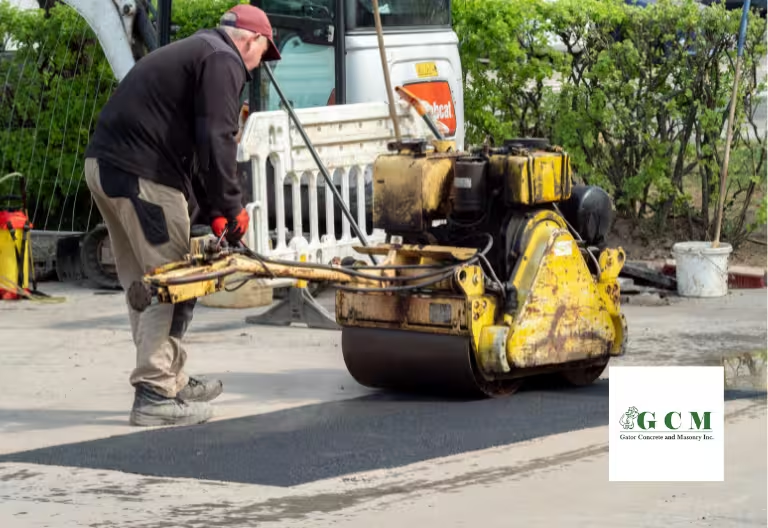
Proof rolling is the process of driving loaded equipment across a prepared subgrade to evaluate soil stability and identify weak areas.
The goal is not to compact the soil. Instead, proof rolling acts as a field test that helps contractors determine whether the soil can adequately support future construction loads.
During the process, contractors watch for signs such as:
- Pumping soils
- Rutting
- Excessive deflection
- Wheel displacement
- Soft spots
- Surface cracking
These indicators often reveal underlying issues that laboratory testing alone may not detect.
Why Contractors Use Proof rolling
Proof rolling provides a final layer of confidence before construction moves forward.
Benefits include:
- Verifying previous compaction efforts
- Identifying hidden weak areas
- Reducing settlement risks
- Supporting foundation performance
- Preventing costly repairs later
- Improving overall site quality
In many cases, proof rolling serves as the last opportunity to find subgrade problems before concrete placement begins.
Why Proof rolling Matters Regardless of Project Type
Reduces Construction Risks
Every construction project carries risk. The earlier those risks are identified, the easier and less expensive they are to address.
Proof rolling helps uncover:
- Unstable fill material
- Buried organic matter
- Saturated soils
- Improper compaction
- Hidden voids
Correcting these conditions before foundation work begins helps avoid costly change orders and schedule disruptions.
Supports Better Foundation Performance
A foundation performs best when loads are distributed evenly across a stable subgrade.
When weak areas remain beneath a building, differential settlement can occur. Over time, this may lead to:
- Cracked slabs
- Uneven floors
- Wall cracking
- Structural movement
Proof rolling helps create a more reliable platform for the entire structure.
Helps Meet Engineering Requirements
Geotechnical engineers often recommend proof rolling as part of their site preparation procedures.
The process provides field verification that actual site conditions match design assumptions. It also supports quality control efforts and helps contractors document proper site preparation activities.
Residential Proof rolling: What Makes It Different?
Smaller Building Loads
Residential projects generally involve lighter structural loads than commercial developments.
Examples include:
- Single-family homes
- Duplexes
- Small custom homes
- Detached garages
- Residential additions
While these structures still require stable foundations, their load demands are typically much lower than warehouses, office buildings, or industrial facilities.
That means minor subgrade issues can often be corrected more easily.
Smaller Site Areas
Most residential lots have relatively small building footprints.
As a result:
- Proof rolling can be completed quickly
- Weak areas are easier to identify
- Remediation efforts are often localized
- Equipment movement is simpler
A residential building pad may only require a few passes to evaluate the entire construction area.
Typical Equipment Used
Residential proof rolling commonly utilizes:
- Loaded dump trucks
- Small rollers
- Compact earthmoving equipment
- Loaded water trucks
The selected equipment must be heavy enough to stress the subgrade without damaging properly prepared areas.
Common Residential Soil Issues
In Florida, residential sites often encounter several recurring problems.
These include:
- Organic material left behind after clearing
- Poorly compacted fill
- Construction debris buried during grading
- Soft spots from previous excavation work
- Excessive moisture
Many of these issues aren’t obvious until proof rolling begins.
Typical Remediation Methods
When weak areas are discovered on residential projects, corrections usually involve straightforward solutions.
Common repairs include:
- Undercutting unsuitable soil
- Recompacting existing material
- Replacing poor soil with engineered fill
- Moisture conditioning
- Localized stabilization
Once repairs are complete, proof rolling is often repeated to verify the correction.
Commercial Proof rolling: Higher Stakes and Greater Complexity
Heavier Structural Loads
Commercial construction places much greater demands on the subgrade.
Examples include:
- Warehouses
- Retail centers
- Office complexes
- Manufacturing facilities
- Distribution centers
These structures often support substantial loads from foundations, equipment, storage systems, and vehicle traffic.
Because of this, even small soil deficiencies can create major long-term problems.
Larger Site Coverage
Commercial projects involve much larger areas than residential developments.
Proof rolling may be required across:
- Building pads
- Parking lots
- Access roads
- Loading docks
- Utility corridors
Covering these areas requires careful planning and coordination.
More Stringent Engineering Requirements
Commercial projects typically involve extensive geotechnical oversight.
Requirements may include:
- Detailed soil reports
- Specific proof rolling procedures
- Engineer observation
- Formal documentation
- Regulatory compliance requirements
Many commercial projects cannot move forward until engineers approve proof rolling results.
Specialized Equipment and Testing
Commercial proof rolling often requires heavier equipment to simulate future loading conditions.
Examples include:
- Fully loaded dump trucks
- Heavy haul vehicles
- Large rollers
- Specialized testing equipment
Additional field testing may also accompany proof rolling, including density testing and moisture evaluations.
Geotechnical engineers are frequently involved throughout the process.
Higher Consequences of Failure
When subgrade issues are missed on commercial projects, the consequences can be significant.
Potential problems include:
- Foundation settlement
- Pavement failures
- Utility damage
- Structural movement
- Repair expenses
- Project delays
The larger the project, the more expensive these failures become.
Key Differences Between Residential and Commercial Proof Rolling
Building Load Requirements
Residential buildings generally exert lighter loads on the soil.
Commercial structures place substantially higher loads on foundations and supporting subgrades.
Because of this, commercial proof rolling standards are often more rigorous.
Site Size and Scope
Residential proof rolling focuses on relatively small lots and building pads.
Commercial proof rolling may involve acres of site preparation and multiple construction zones.
The scope alone changes how the process is planned and executed.
Equipment Selection
Equipment must match project requirements.
Residential projects often use:
- Loaded dump trucks
- Small rollers
Commercial projects frequently require:
- Heavier trucks
- Larger rollers
- Specialized testing equipment
The objective remains the same, but the equipment used may differ significantly.
Documentation and Reporting
Residential projects often rely on contractor observations and engineer review when required.
Commercial projects generally involve:
- Formal inspection records
- Engineer-reviewed documentation
- Written reports
- Testing results
Documentation requirements are usually much stricter.
Soil Remediation Expectations
Residential repairs are commonly localized.
Commercial projects may require:
- Large-scale undercutting
- Extensive soil replacement
- Stabilization programs
- Additional testing
The larger the site, the more complex remediation becomes.
Cost and Timeline Considerations
Residential proof rolling is typically completed quickly and with lower costs.
Commercial proof rolling requires more coordination, more equipment, and often additional engineering oversight.
That increases both cost and scheduling complexity.
Florida-Specific Considerations for Both Project Types
Sandy Soils
Florida’s sandy soils create unique challenges.
Loose sands can appear stable but may shift under loading if not properly compacted. Moisture conditioning becomes especially important when preparing sandy subgrades.
Proof rolling helps verify whether those soils have achieved adequate stability.
High Groundwater Levels
Throughout Tampa and many surrounding areas, groundwater levels can be relatively shallow.
Saturated soils may:
- Pump under loading
- Lose strength
- Produce misleading compaction results
Proof rolling helps identify areas affected by excessive moisture before construction advances.
Frequent Rainfall
Florida weather rarely follows a schedule.
Heavy rainfall can quickly change site conditions.
Proof rolling performed immediately after significant rain events may not provide an accurate picture of long-term soil performance. Contractors often need to allow the site to dry before testing.
Previously Developed Sites
Redevelopment projects often present hidden surprises.
We’ve encountered sites containing:
- Buried construction debris
- Old foundations
- Uncontrolled fill
- Organic materials
Proof rolling frequently reveals these hidden issues before they become expensive structural problems.
Common Mistakes During Proofrolling
Using Insufficient Equipment Weight
Equipment that is too light may fail to expose weak soils.
Proper loading is essential for meaningful results.
Conducting Proofrolling on Saturated Soil
Excessively wet conditions can distort observations and create misleading results.
Timing matters.
Ignoring Minor Deflection Areas
Small areas of movement often become larger problems later.
Even minor deflection deserves investigation.
Failing to Coordinate with Geotechnical Recommendations
Every site is different.
Ignoring engineering recommendations can create unnecessary risk and lead to failed inspections.
Proceeding Without Correcting Identified Soft Spots
Finding a problem is only half the process.
The issue must be corrected before construction moves forward.
When Should Contractors Perform Proof rolling?
After Rough Grading
Proof rolling is commonly performed once rough grading is complete and the site has reached design elevations.
Before Foundation Construction
This is often the most critical proof rolling stage.
Any identified issues should be corrected before foundation installation begins.
Prior to Pavement Installation
Parking lots, drive lanes, and access roads also benefit from proof rolling.
Stable pavement starts with stable subgrade.
Following Major Soil Corrections
Whenever significant remediation occurs, proof rolling should be repeated to verify that repairs were successful.
Choosing the Right Proof Rolling Approach for Your Project
Understanding Project Requirements
Residential and commercial projects have different expectations.
The appropriate proof rolling approach should match:
- Building loads
- Site size
- Soil conditions
- Engineering requirements
- Project goals
Working with Experienced Site Contractors
Experience matters.
A contractor who understands soil behavior can identify potential issues quickly and recommend practical corrective actions before they become larger problems.
Coordinating with Engineers
Proof rolling should always align with geotechnical recommendations and project specifications.
Strong communication between contractors and engineers helps ensure that site preparation supports long-term structural performance.
Build on a Strong Foundation from Day One
Whether you’re preparing a custom home site, commercial building pad, parking lot, or large-scale development, proof rolling is one of the smartest investments you can make before construction begins. Identifying weak soils early helps reduce risk, protect your foundation, and keep your project moving forward.
At Gator Concrete & Masonry, we bring more than 25 years of experience in grading, excavation, foundations, structural concrete, and masonry construction throughout the Tampa area. Our team understands Florida soils, groundwater challenges, and the site preparation requirements that help projects succeed.
Contact Gator Concrete & Masonry today to discuss your upcoming project and learn how proper site preparation and proof rolling can help protect your investment from the ground up.