
Quick Overview:
Demucking is not about digging as deep as possible. It’s about removing unsuitable organic soils until stable support is reached. Learn how soil conditions, groundwater, structure loads, engineering recommendations, and project budgets determine the right demucking depth for every site.
When preparing a construction site, few activities are as important as creating a stable foundation beneath the project. Before concrete is poured, walls are built, or pavement is installed, the ground itself must be capable of supporting the loads placed upon it. That’s where demucking often comes into play.
In Florida, especially throughout the Tampa area, encountering muck soils is common. Wetlands, low-lying properties, and areas with a history of standing water frequently contain organic deposits that simply cannot support structures long term. Left in place, these soils can compress, shift, and create serious problems after construction is complete.
One of the biggest misconceptions in site preparation is the belief that deeper is always better when demucking. In reality, digging deeper than necessary can create significant costs without adding value. The goal is not to remove as much soil as possible. The goal is to remove unsuitable material until stable, competent bearing soil is reached.
So how deep should you demuck? The answer depends on several factors. Soil conditions, groundwater levels, structural loads, engineering recommendations, and project economics all play a role. Understanding these factors can help property owners, developers, and contractors make informed decisions while avoiding unnecessary expenses.
What Is Demucking?
Understanding Muck Soils
Muck is a highly organic soil formed through the decomposition of vegetation and other organic matter over long periods of time. It is commonly found in wetlands, marshes, drainage areas, and low-lying properties where water remains present for extended periods.
Unlike compact sand or dense native soils, muck contains large amounts of organic material and moisture. Its structure is soft, compressible, and unstable.
In many parts of Florida, organic soils can develop over decades or even centuries. Layers may be shallow in one location and several feet deep just a short distance away.
The problem is simple. Organic soils continue to decompose over time. As they decompose, they lose volume. That loss of volume translates directly into settlement beneath structures.
Why Contractors Perform Demucking
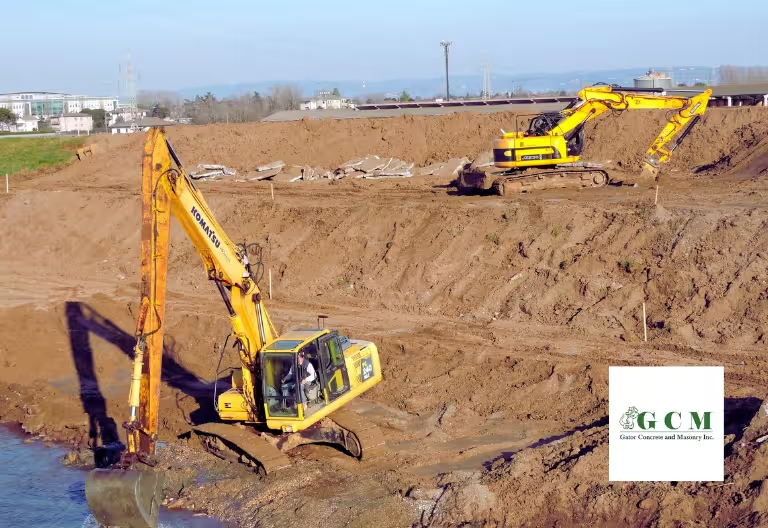
Demucking removes unsuitable organic material and replaces it with engineered fill capable of supporting construction.
The primary goals include:
- Preventing settlement
- Reducing the risk of structural failure
- Improving load-bearing capacity
- Creating a stable construction platform
- Meeting engineering specifications
- Supporting long-term foundation performance
Without proper demucking, even well-designed structures can experience costly issues years after completion.
The Biggest Myth: There Is No Universal Demucking Depth
Why Every Site Is Different
One of the most common questions contractors hear is, “How many feet should we remove?”
The truth is there is no standard answer.
Every site is unique. Soil conditions can change dramatically across a single property. One area may contain only a few inches of organic material while another section may have several feet of muck beneath the surface.
We’ve seen projects in Tampa where test pits showed acceptable soil less than a foot below grade. We’ve also encountered sites where unsuitable material extended several feet deep.
Visual inspections alone cannot reliably determine the true depth of organic deposits. What appears firm on the surface may be hiding unstable material underneath.
The Risks of Following a “Standard Depth”
Applying a fixed excavation depth without proper investigation can create serious problems.
Under-excavation
Removing too little material may leave organic soils behind. This can result in:
- Settlement
- Foundation movement
- Pavement failure
- Cracking and structural damage
Over-excavation
Removing too much material creates different challenges:
- Higher excavation costs
- Increased disposal fees
- Additional imported fill requirements
- Longer construction schedules
Finding the right balance is critical.
Factor #1: Thickness of the Organic Layer
Identifying the True Depth of Unsuitable Material
Determining the thickness of muck deposits is often the first step in planning demucking operations.
Contractors and engineers use several methods:
Soil Borings and Geotechnical Reports
Geotechnical investigations provide valuable information about subsurface conditions. Soil borings reveal the depth and characteristics of organic layers and identify suitable bearing soils below.
Test Pits and Field Investigations
Excavated test pits allow direct observation of site conditions and help verify soil boring data.
Signs During Excavation
Experienced operators often identify organic soils by:
- Dark coloration
- Strong organic odors
- Soft, spongy texture
- Visible roots or decomposed vegetation
- Excessive pumping under equipment
Why Muck Thickness Matters
Thin organic layers may require only limited removal before stable soil is encountered.
Deep deposits can present greater challenges and may require:
- Extensive excavation
- Large quantities of fill
- Ground improvement techniques
- Alternative stabilization methods
The thicker the muck layer, the more important proper planning becomes.
Factor #2: Planned Structure and Load Requirements
Residential vs. Commercial Construction
Not all structures place the same demands on the ground beneath them.
A residential slab may tolerate conditions that would be unacceptable beneath a large commercial building.
Factors influencing excavation depth include:
- Building size
- Structural loads
- Foundation type
- Long-term settlement tolerance
Heavy Structures Require Greater Stability
Projects with higher loading demands often require more aggressive site preparation.
Examples include:
Warehouses
Large floor slabs and storage loads require consistent support across the entire footprint.
Commercial Buildings
Office buildings, retail centers, and industrial facilities often have strict settlement requirements.
Retaining Walls
Retaining structures depend on stable foundations to resist soil pressure and prevent movement.
Roadways and Parking Lots
Traffic loads create repeated stress that can quickly expose weak subgrade conditions.
The heavier the structure, the more important it becomes to eliminate unsuitable soils.
Factor #3: Soil Conditions Beneath the Muck
Finding Competent Bearing Material
The purpose of demucking is not simply removing bad soil. It is reaching good soil.
Several types of bearing material may be encountered beneath organic deposits.
Sandy Soils
Florida’s sandy soils often provide excellent support when properly compacted.
Clay Layers
Certain clay deposits may offer adequate bearing capacity, though moisture sensitivity must be evaluated.
Dense Native Soils
Dense natural soils frequently provide the stable platform needed for construction.
When Stable Soil Is Reached
Indicators that excavation may stop include:
- Firm excavation bottoms
- Minimal rutting
- Consistent soil conditions
- Stable equipment movement
- Reduced pumping
However, field observations alone should not replace engineering verification.
Professional evaluation ensures that excavation has reached suitable bearing material.
Factor #4: Groundwater Conditions
How Water Affects Demucking Operations
Groundwater often plays a major role in Florida excavation projects.
High moisture content can make even relatively stable soils difficult to work with.
Challenges include:
- Excavation instability
- Sidewall collapse
- Equipment access issues
- Reduced compaction effectiveness
In saturated conditions, removing muck may become more difficult as excavation progresses.
High Water Table Challenges
A high water table can increase project complexity significantly.
Safety Concerns
Standing water creates hazards for workers and equipment.
Equipment Limitations
Heavy machinery may struggle to operate efficiently in saturated conditions.
Increased Project Costs
Dewatering systems, pumps, and additional stabilization measures can add substantial costs.
Water management often becomes just as important as excavation itself.
Factor #4: Groundwater Conditions
How Water Affects Demucking Operations
Groundwater often plays a major role in Florida excavation projects.
High moisture content can make even relatively stable soils difficult to work with.
Challenges include:
- Excavation instability
- Sidewall collapse
- Equipment access issues
- Reduced compaction effectiveness
In saturated conditions, removing muck may become more difficult as excavation progresses.
High Water Table Challenges
A high water table can increase project complexity significantly.
Safety Concerns
Standing water creates hazards for workers and equipment.
Equipment Limitations
Heavy machinery may struggle to operate efficiently in saturated conditions.
Increased Project Costs
Dewatering systems, pumps, and additional stabilization measures can add substantial costs.
Water management often becomes just as important as excavation itself.
Factor #5: Project Budget and Economics
Balancing Performance and Cost
Every project has financial constraints.
Demucking costs typically include:
- Excavation
- Hauling
- Disposal
- Imported fill
- Compaction
- Testing and inspection
Removing more material than necessary can quickly increase expenses.
The goal is achieving performance requirements while maintaining cost efficiency.
When Alternative Solutions Make Sense
Sometimes full excavation is not the most economical option.
Alternative approaches may include:
Geotextiles
Separation fabrics help stabilize weak soils and improve load distribution.
Geogrids
Geogrids reinforce fill materials and increase stability.
Soil Stabilization
Chemical or mechanical stabilization methods can improve existing soil performance.
Structural Fill Platforms
Engineered fill systems can create stable construction platforms over challenging ground.
An experienced contractor and geotechnical engineer can determine when alternatives provide better value.
Factor #6: Geotechnical Recommendations
Why Engineering Guidance Matters
Successful demucking decisions rely heavily on geotechnical information.
Soil testing provides data that cannot be obtained through visual inspection alone.
Engineers evaluate:
- Soil composition
- Bearing capacity
- Groundwater conditions
- Settlement potential
- Compaction requirements
Their recommendations are tailored to the specific project and site conditions.
Following the Geotechnical Report
A geotechnical report may specify:
- Required excavation depths
- Acceptable bearing materials
- Fill specifications
- Compaction standards
- Testing requirements
Following these recommendations helps ensure long-term performance and compliance with local requirements.
How Contractors Verify They Have Demucked Enough
Field Verification Methods
Verification is an essential step in every demucking project.
Common methods include:
Proof Rolling
Heavy equipment is driven across the prepared surface to identify weak areas.
Test Pits
Additional excavation confirms soil conditions and consistency.
Visual Inspections
Experienced personnel evaluate soil characteristics during excavation.
Engineer Observations
Geotechnical professionals often inspect exposed subgrades before approval.
Indicators of Competent Soil
Signs of acceptable bearing conditions include:
- Reduced pumping
- Consistent density
- Minimal rutting
- Stable equipment movement
- Uniform soil conditions
These observations help confirm that unsuitable material has been removed.
Common Demucking Mistakes That Increase Costs
Removing Too Little Material
Insufficient excavation can create long-term problems.
Common consequences include:
- Settlement
- Cracked slabs
- Foundation movement
- Pavement failure
- Expensive repairs
Cutting corners during site preparation rarely saves money in the long run.
Removing Too Much Material
Over-excavation creates its own challenges.
These may include:
- Excess disposal costs
- Additional imported fill
- Increased trucking expenses
- Longer schedules
More excavation is not always better.
Skipping Verification
Assuming the soil is acceptable based solely on appearance can be risky.
Hidden organic pockets often remain undetected without proper verification.
What looks stable today may become a costly problem later.
Real-World Example: Two Sites, Two Different Demucking Depths
Site A: Shallow Organic Layer
On one Tampa-area project, a site investigation identified a thin organic layer beneath the surface.
Conditions included:
- Approximately 8 to 12 inches of organic soil
- Dense native sand below
- Relatively low groundwater influence
After removing the unsuitable material and replacing it with compacted fill, the site achieved required bearing conditions quickly.
The result was a cost-effective solution with minimal excavation.
Site B: Deep Muck Deposit
Another project presented a very different challenge.
Conditions included:
- Several feet of organic muck
- High groundwater levels
- Extensive soft areas across the site
Excavation revealed deeper unsuitable material than initially expected.
Additional stabilization measures were required, including engineered fill placement and reinforcement methods.
Although costs increased, proper site preparation prevented future settlement issues and provided a stable foundation for construction.
The lesson was clear. Two sites located within the same region required completely different approaches because subsurface conditions were different.
Every Successful Project Starts With Proper Site Preparation
When it comes to demucking, there is no magic number. The correct depth depends on the thickness of the organic layer, structural loads, underlying soil conditions, groundwater levels, project economics, and geotechnical recommendations.
The goal is not to excavate as deeply as possible. The goal is to remove unsuitable soils until competent bearing material is reached and verified.
A well-planned demucking operation can prevent settlement, improve foundation performance, reduce long-term maintenance costs, and keep projects moving forward with confidence.
Partner With Gator Concrete and Masonry Inc.
At Gator Concrete and Masonry Inc., we bring more than 25 years of experience in grading, excavation, foundations, and site preparation throughout the Tampa area. Our team understands Florida soil conditions, groundwater challenges, and the importance of getting site work right the first time.
Whether you’re planning a residential development, commercial project, retaining wall, parking lot, or foundation installation, we’re ready to help evaluate your site and provide practical solutions that fit your project goals and budget.
Contact Gator Concrete and Masonry Inc. today to discuss your site preparation needs and schedule a project consultation. A solid structure always starts with solid ground.