
Quick Overview:
Concrete work shapes the structure long before the first pour. Early contractor involvement prevents field conflicts, improves scheduling, and ensures engineering intent is executed correctly on structural foundations and masonry systems.
Concrete gets treated like a step in the schedule. Excavation happens, then foundations, then framing. Simple timeline. But in reality, concrete decisions shape the entire structure long before the first truck arrives.
Over time you start seeing the same pattern. Projects that involve the concrete contractor early run smoother. Projects that don’t usually run into field conflicts, redesigns, and schedule problems.
Concrete is structural work. It carries loads, anchors framing systems, and transfers the weight of the entire building into the soil. When the contractor responsible for building that system is involved early, the structure gets executed the way the engineer intended.
Let’s break down why early concrete contractor involvement improves structural execution.
Concrete Work Is Structural, Not Just Sequential
Many construction schedules treat concrete contractors like a later trade. The assumption is that plans are done, permits are issued, then the concrete crew comes in and pours what’s on the drawings.
But structural concrete doesn’t work that way.
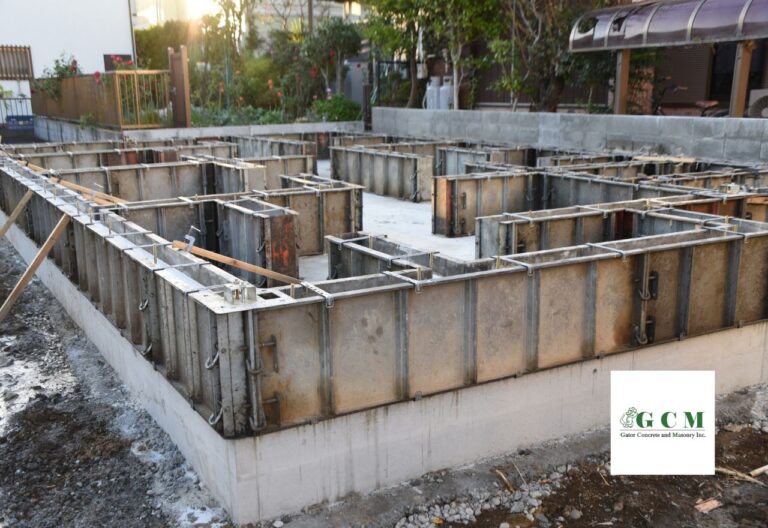
Foundations, grade beams, drilled piers, and reinforced masonry walls form the backbone of the building. Every column load, every beam reaction, every wall system eventually transfers through concrete into the ground.
Because of that, concrete decisions influence several things early in the project:
- Structural layout
• Elevations and slab heights
• Reinforcement placement
• Framing connections
• Utility routing
When concrete contractors review plans early, they can identify constructability issues before work begins. Reinforcement congestion, beam depths, or foundation layout conflicts can all be discussed with engineers before the project reaches the field.
That early coordination usually improves four major things:
- Structural accuracy
- Project scheduling
- Cost control
- Code compliance
Instead of reacting to problems during construction, the team solves them during planning. That difference alone prevents many delays and field adjustments.
Structural Concrete Decisions Start Long Before the First Pour
The first concrete truck might not arrive for weeks. But structural decisions affecting that pour happen much earlier.
Engineers design foundations to transfer loads safely through the building into the soil. That system might include grade beams, structural slabs, drilled piers, or reinforced CMU walls.
For those systems to perform correctly, they also need to be buildable.
Experienced concrete contractors review several items early in the process.
Structural drawings and engineering notes
Contractors review beam layouts, reinforcement schedules, and connection details to confirm they can be constructed efficiently in the field.
Load paths and reinforcement density
Areas with heavy structural loads often contain dense reinforcement cages. Contractors evaluate whether concrete can be placed and consolidated properly around the steel.
Concrete cover and durability requirements
Exposure conditions affect reinforcement protection. Early review ensures the design aligns with real construction practices.
Soil conditions and geotechnical reports
Foundation performance depends heavily on soil preparation and compaction. Contractors review these conditions before excavation begins.
When this review happens early, the project benefits immediately:
- Fewer RFIs during construction
- Less redesign after permits
- Better coordination between trades
- Cleaner structural execution
It’s the difference between building from a well coordinated plan and trying to solve problems after crews are already working.
Early Coordination Prevents Structural Conflicts in the Field
Modern residential construction often includes complex structural systems.
Many projects now include:
- Deep foundations
- Elevated slabs
- Reinforced masonry walls
- Structural columns and beams
When concrete contractors are brought in late, field conflicts tend to appear.
One common issue is beam elevation conflicts with plumbing or utilities. Structural beams may occupy the same space planned for underground systems.
Another frequent problem involves reinforcement congestion at column intersections. Multiple reinforcement cages can meet in a single location, making placement and consolidation difficult.
Contractors also encounter grade beam conflicts with underground utilities when layout coordination happens too late.
And sometimes formwork limitations are overlooked in the design phase. Certain structural shapes require specialized forms that take time and planning.
Early contractor involvement solves these problems before construction begins.
Instead of discovering issues after excavation starts, the team reviews structural details early and adjusts them while changes are still easy to make. Engineers maintain structural intent. Builders maintain scheduling control.
The result is smoother construction and fewer surprises.
Constructability Review Improves Engineering Execution
Structural engineers design systems for strength. Contractors build those systems under real field conditions. A constructability review connects those two perspectives.
During early planning discussions, concrete contractors evaluate several practical factors.
Rebar congestion
Dense reinforcement can prevent concrete from flowing properly. Contractors assess whether steel placement allows for proper consolidation.
Formwork complexity
Certain beams, columns, or wall systems require complex formwork. Contractors review whether those forms can be built efficiently.
Pour sequencing
Large structural pours must be carefully planned. Contractors determine where joints should occur and how the structure will be placed.
Equipment access
Concrete pumps, cranes, and staging areas require space. Tight job sites benefit from early planning.
When these details are reviewed early, engineers keep their structural design intact while contractors ensure the system can actually be built.
Builders benefit too. Pours are cleaner, inspection results improve, and structural performance stays consistent.
Code Compliance Requires Contractor Input
Projects located in coastal areas or flood zones must meet strict construction requirements.
These often include:
- FEMA flood elevation requirements
- Freeboard elevation adjustments
- Elevated foundation systems
- Structural connections between foundation, walls, and framing
Contractors who regularly build in these environments understand how those rules affect real construction.
Early contractor involvement helps confirm that foundation elevations align with flood requirements and that structural tie ins work properly with framing systems.
Without that coordination, problems can appear later during permitting or inspections.
Those problems might include permit delays, failed inspections, or structural revisions during construction.
Bringing the contractor into early discussions helps prevent those issues and keeps the project moving forward.
Early Concrete Planning Improves Construction Scheduling
Concrete work usually starts the structural phase of a project. Once foundations are complete, framing and other trades follow quickly.
Delays in concrete work can slow the entire project.
Early planning helps prevent those delays by addressing several key scheduling factors:
- Excavation timelines
- Reinforcement fabrication
- Formwork preparation
- Inspection coordination
With proper planning, crews arrive prepared, materials are ready, and inspections are scheduled on time.
That leads to smoother scheduling and fewer idle crews waiting for work to begin.
Strong Structural Projects Come From Collaboration
The best structural projects rarely happen in isolation. They come from coordination between multiple professionals.
Successful teams typically include:
- Structural engineers
- Architects
- Builders or general contractors
- Concrete specialists
When these groups communicate early, structural details become clearer and field conflicts become rare.
Builders gain predictability. Engineers see their designs executed properly. Contractors build efficiently.
Everyone benefits from better coordination.
Build Strong Foundations with Gator Concrete and Masonry Inc
At Gator Concrete and Masonry Inc, we bring more than 20 years of experience in foundations, grading, excavation, concrete structures, and masonry systems.
We work closely with builders, engineers, and architects to make sure structural plans translate smoothly into real construction.
If you’re planning a project that requires structural concrete or masonry work, early coordination with the right contractor can make a major difference.
Strong buildings start with strong foundations. And strong foundations start with good planning.
Contact Gator Concrete and Masonry Inc. today!