
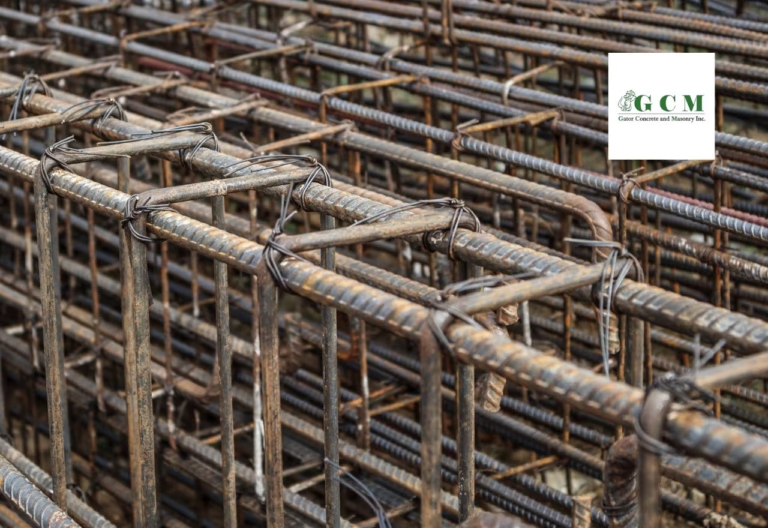
Concrete’s tough, no doubt about it. We work with it every single day here in Tampa, and we see what it can handle, but here’s the truth we tell every crew and every homeowner “concrete might be strong, sure… until it cracks where you don’t want it”. And that’s exactly why reinforcement matters. Rebar, when placed right, makes the whole structure behave better, last longer, and stay stable even when the Florida heat, moisture, and soil start doing their thing. When placement or spacing is off, though? Oh boy. That’s when you get callbacks, repairs, frustration, and sometimes even major failures.
Let’s break this down in a way that makes sense, because understanding reinforcement isn’t just for engineers. It’s for anyone who wants their concrete to stand strong.
Why Rebar Placement Matters More Than You Think
We’ve seen perfect concrete pours fail just because the steel wasn’t where it was supposed to be. Happens more often than folks think. Concrete alone handles compression well, but the moment tension hits—like bending, shifting soil, or heavy loads, it’s going to crack. Rebar steps in to hold those tension zones together, spreading the load, reducing movement, and keeping cracks small and controlled.
When spacing’s wrong or bars aren’t set at the correct height, the structure starts working harder than it should. Some issues sneak up slowly like hairline cracks, settling, uneven slabs. Others hit all at once, like beam failures or slab curling. And trust us, nothing blows a schedule like a slab that has to be torn out and redone.
Poor placement leads to:
- Weak load distribution
- Early cracking
- Rusting of exposed or shallow bars
- Concrete separation
- Long-term durability issues
That’s why this stuff matters. When reinforcement is right, the slab acts like a single, unified system. When it’s wrong? The slab fights itself.
What Reinforcement Really Does in Concrete
A lot of folks think rebar is just “extra strength,” but it’s more than that. Concrete crack, period. Rebar controls how and where it cracks.
Reinforcement works by:
- Resisting tension so the concrete doesn’t fail under bending loads.
- Holding the slab together when cracks form.
- Supporting tension zones, which usually sit near the bottom of slabs and beams.
If the bars sit too low, too high, or shift during the pour, the slab loses the balance between compression (top) and tension (bottom). When subcontractors rush reinforcement layout, they often underestimate lap lengths, forget hooks, or skip checking bending points. Simple mistakes, but costly ones.
One common issue we see? Crews spacing bars by “eye measurement.” Doesn’t work. A couple of inches off in spacing changes how the slab handles stress. Structural drawings aren’t guesses, they’re calculated.
Rebar Placement Basics Every Crew Should Know
This is where the job either goes smooth or goes sideways. Good placement builds solid structure. Bad placement leaves a mess hidden inside the concrete.
A few rules worth sticking to:
- Slabs
Most slabs need bars or mesh in the tension zone, usually the bottom third. Keep them lifted with chairs or dobies. Never let steel rest in the dirt. Ever.
- Beams
Bars follow the shape of the tension zone. Bottom bars handle the biggest tension, and top bars take compression where needed. Hooks, stirrups, ties – everything counts.
- Columns
Vertical bars are the backbone. Ties hold everything together so the rebar cage doesn’t buckle or burst under pressure.
- Footings
Footing steel spreads loads into the soil. Rebar should sit deep enough for cover but not drag through the dirt.
Cover Requirements Matter
Concrete cover protects the steel from moisture, salt, and rust. Too little cover and the rebar corrodes. Too much cover and the steel isn’t in the right tension zone anymore.
Tying vs. Welding
- Tying is the standard. Easier, safer, cheaper, and flexible during the pour.
- Welding is only used with specific bar types and special designs.
Use of Chairs and Spacers
Here’s where many crews cut corners. Chairs and spacers keep bars locked at the correct height. Without them, the bars sag, shift, or end up pressed against the soil – completely useless.
Rebar Spacing: How to Get It Right
Spacing isn’t guesswork, and it isn’t “close enough.” It’s set by engineers based on loads, soil, thickness, and design.
What determines spacing?
- Structural load
- Member size
- Soil or subgrade conditions
- Building codes
- Slab thickness
- Environmental exposure
Horizontal spacing spreads the load. Vertical spacing keeps the reinforcement in the right zone.
Typical Spacing
- Slabs: 12″ on center
- Columns/beams: varies, but tight spacing near tension areas
- Footings: 12″–18″ depending on width
Too close or too far? Problems happen.
- Too tight: concrete can’t settle between bars, causing honeycombing.
- Too wide: cracks widen, slab loses strength, and bars can’t carry tension properly.
Spacing sets the steel’s effectiveness. And honestly, if you’re eyeballing it, it’s wrong.
Practical Tips for Ensuring Accurate Rebar Installation
We’ve learned a lot in our 20+ years, and here are the things that keep a job on track:
Always read the notes
Plan notes hide critical details – laps, hooks, bar sizes, spacing adjustments, everything.
Pre-layout is your best friend
Chalk lines, spray marks, templates – these prevent mistakes before steel even hits the ground.
Use spacing tools
A simple bar spacer or rebar gauge saves hours of rework.
Check everything twice
Look for:
- Proper laps
- Clean bends
- Correct bar size
- Tight ties
Inspect before pour
Once concrete flows, it’s too late to fix anything. Foremen should check clearances, cages, supports, and alignment. Look at anchor bolt placement – misalignment here ruins entire slabs.
Safety Considerations During Rebar Placement
Rebar work looks simple, but it bites if you’re not careful.
Safety must-haves:
- Gloves for sharp edges
- Tie-wire pliers to prevent hand injuries
- Rebar caps for impalement protection (OSHA requirement)
- Proper lifting techniques – bundles are heavier than they look
- Clear walk paths around cages
We’ve seen folks trip over rebar mats or get cut on exposed ends. A little prep saves a lot of trouble.
Common Rebar Placement Issues (and How to Avoid Them)
Even good crews make mistakes. But knowing what to watch for? That’s how you avoid costly rework.
Sagging Bars
Caused by weak or missing chairs. Fix it by adding supports every few feet.
Wrong Lap Length
Laps transfer tension between bars. Too short and the tension fails. Always follow plan notes or code minimums.
Misaligned Anchor Bolts
When bolts don’t match the template, the whole slab becomes a headache. Check alignment before tying final bars.
Rebar Shifting During Pour
Concrete pressure moves steel if it’s not tied tight. Use diagonal ties and support bars over long spans.
Do it right the first time, your future self will thank you.
Build Stronger With Gator Concrete & Masonry Inc
If you want concrete work done right – reinforcement, layout, formwork, the whole package – Gator Concrete & Masonry Inc is your team. We know Tampa soils, Tampa weather, Tampa projects. And we handle everything from grading and drainage (ADS drains, underground retention drains), to demolition, block walls, site cleaning, tree stump removal, and even sand removal after storms.
When you’re ready for work that’s done clean, done right, and built to last – give GCM a call. Let’s get your project on solid ground.