
Quick Overview
Concrete moves due to shrinkage, heat, and soil shifts. Learn how Tampa builders control cracking through proper joints, reinforcement, curing, grading, and drainage for durable slabs and block walls.
Concrete Moves — Even When You Don’t See It
Concrete is strong. Solid. Feels permanent under your boots. But it is not static. It breathes, shifts, tightens, relaxes. Quietly. Slowly. Sometimes fast when the heat hits hard. That truth sits at the center of Managing Shrinkage, Expansion, and Movement in Modern Builds.
We’ve been pouring foundations and building CMU walls around Tampa for 20 years. You learn something quick in Florida. The ground moves. The air holds moisture like a wet towel. The sun bakes slabs by noon. And when concrete reacts, it doesn’t ask permission.
Movement is normal. That’s the key. Shrinkage, thermal change, soil expansion, settlement. All of it expected. The danger shows up when movement is ignored. When a slab has nowhere to relieve stress, it relieves it anyway. Through cracks. Through lifted edges. Through stair step fractures in block walls.
Florida amplifies movement. High humidity slows drying but surface heat pulls moisture out fast. Sudden rainstorms soak soils, then days of sun dry them out again. Sandy areas drain quick. Clay pockets swell and push. You get differential movement under the same structure. One corner stable. The other active. That’s where problems begin.
We’ve seen commercial slabs poured wide open, no joint plan, tight schedule, no curing protection. Six months later. Random cracking everywhere. Owners asking questions. Repairs that cost more than doing it right the first time.
Experienced contractors plan for movement. Rookies react to cracks. That’s the difference.
Managing movement is not about stopping it. You won’t. It’s about directing it. Giving stress a place to go. Designing for reality. That’s how durable builds happen in Tampa.
Understanding Concrete Shrinkage
Shrinkage is the first movement concrete experiences. And it starts early.
Plastic Shrinkage
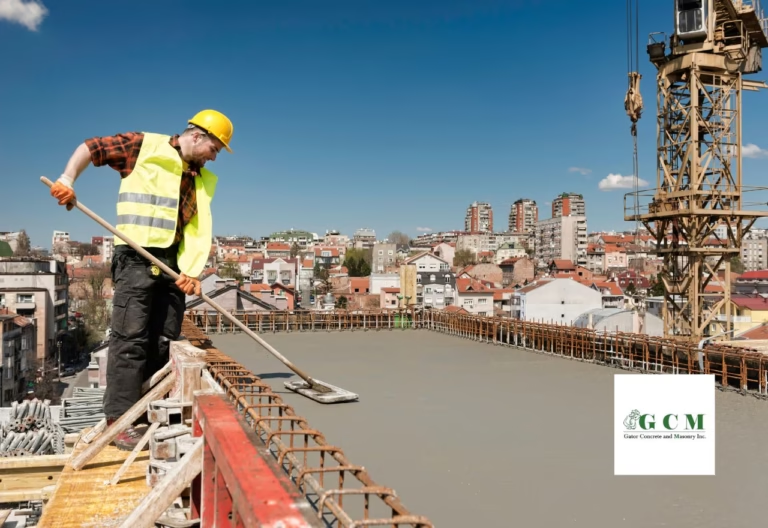
In the first few hours after a pour, moisture leaves the surface fast, especially in heat and wind. Tampa afternoons can be brutal. Surface dries before the interior gains strength. Fine cracks appear. Spider web patterns. We call them plastic shrinkage cracks.
It happens when evaporation exceeds bleed water rising to the top. According to industry guidance from organizations like the American Concrete Institute, evaporation control is critical in hot weather placements. That matches what we see in the field.
Prevention is simple in theory, harder in practice:
- Time pours early morning
- Use windbreaks
- Fog the surface
- Apply evaporation retarders
- Start curing immediately
We’ve stopped pours mid day before because wind picked up. It costs time. Saves long term headaches.
Drying Shrinkage
Weeks later, moisture continues leaving hardened concrete. The slab shortens slightly. If it’s restrained by footings, walls, or friction with the base, tension builds.
Large slab pours without proper control joints will crack randomly. Not if. When.
On warehouse slab projects, it’s common to see good concrete and solid workmanship undermined by joint spacing that’s too wide. The idea is often to reduce saw cuts for a cleaner finish. But when panels are oversized, stress builds as the slab shrinks. Within months, diagonal cracks can form across the surface. Structurally the slab may still perform, yet visually it looks uncontrolled and careless. It’s a clear reminder that joint spacing is not about appearance. It’s about directing movement. Ignore it, and the concrete will draw its own lines.
Autogenous Shrinkage
Modern high strength mixes use lower water cement ratios. Great for strength. Less forgiving for internal shrinkage. When there’s not enough free water inside the mix, internal chemical reactions pull moisture inward. The concrete shrinks from within.
Chasing strength numbers without considering shrinkage risk is a mistake. Strength is important. Balance is smarter.
Thermal Expansion and Contraction
Concrete expands when hot. Contracts when cool. Simple science. But in Florida, temperature swings between morning shade and afternoon sun can create serious stress.
Exterior slabs absorb heat fast. We’ve measured surface temps well above air temperature on summer days. That expansion pushes against fixed points. Walls. Columns. Adjacent slabs.
If expansion joints are missing, pressure builds. Something gives. Usually the slab edge or the wall connection.
On large commercial slabs, temperature differentials matter even more. One section shaded. One exposed. Uneven expansion leads to curling and internal stress.
Block walls need vertical expansion joints at calculated intervals. Long masonry runs without joints? They’ll crack. Often at the weakest mortar line.
Skipping joints saves time during construction. It costs much more later. Concrete needs room to move. You either provide it by design, or it creates its own path.
Soil Movement: The Hidden Force Below
Concrete doesn’t float in space. It sits on soil. And soil moves.
Expansive Soils
Clay absorbs water and swells. During rainy seasons, it expands. In dry spells, it shrinks. Slab on grade construction is vulnerable when moisture control is poor.
We’ve seen slabs lift near landscape beds because irrigation kept one side wet. Other side dry. That uneven pressure creates stress.
Settlement and Compaction Issues
Improper grading and base prep is a silent killer. Loose fill compresses later under load. Slabs drop. Edges settle.
At GGCM, grading and compaction are not rushed steps. We proof roll. We compact in lifts. We remove organic material, tree roots, debris. Especially after storm season when sand washes into lots.
Water intrusion under slabs weakens subgrade. Poor drainage creates long term settlement risk.
Tampa Conditions
Most of Tampa has sandy soils. Good drainage. But pockets of clay exist. We test, we observe, we adjust. Drainage planning is key. Surface water must move away from structures.
Ignoring soil behavior while focusing only on concrete mix is shortsighted. The slab is only as stable as what’s beneath it.
Control Joints vs. Expansion Joints: Not the Same Thing
We hear it often. “Just cut some joints.” But not all joints do the same job.
Control joints create weakened planes so shrinkage cracks form in straight lines. They don’t prevent cracks. They control where they happen.
General rule of thumb. Space joints 24 to 30 times the slab thickness in inches, depending on conditions. A 4 inch slab might need joints every 8 to 10 feet. Layout matters.
Saw cutting timing matters too. Too early, edges ravel. Too late, cracks form before cutting.
Expansion joints are different. They separate slabs from walls or adjoining slabs. Often filled with compressible material. They allow full movement without transferring stress.
Isolation joints wrap around columns or footings. Preventing structural restraint.
Common field mistake? Skipping isolation around fixed points. That creates cracking radiating from columns.
Joint planning happens before the pour. Not after cracks appear.
Reinforcement: Steel, Fiber, and Structural Design
Rebar is not crack prevention. It is crack control.
Steel reinforcement holds cracked sections together. It maintains structural integrity after cracking. Important distinction.
Proper placement is critical. Rebar sitting at the bottom does little for tension control. It must be supported at correct depth.
Wire mesh helps distribute stress but often ends up flat on the base if not supported. We chair it up. Every time.
Fiber reinforcement has value in certain slab applications. It reduces plastic shrinkage cracking. Helps distribute micro cracks. But it does not replace structural steel in load bearing elements.
Structural engineers design for movement. We coordinate with them early. Movement joints, reinforcement layout, soil conditions. All connected.
Designing for movement means accepting cracks will happen, but controlling width and location.
Block Walls and Movement Management
CMU walls behave differently than slabs but still move.
Vertical reinforcement inside block cores strengthens walls against lateral loads, especially in Florida where wind loads matter. Reinforced and grouted cells create strength. But long unbroken walls need control joints.
Without them, shrinkage and thermal change cause stair step cracks along mortar lines.
Differential settlement between foundation and wall also creates stress. If footing shifts even slightly, masonry reflects it.
We plan control joints based on wall length and design. We coordinate with structural drawings. It’s not guesswork.
Florida wind codes demand solid reinforcement and anchorage. Movement joints must still exist. Strength and flexibility working together.
Curing: The Most Overlooked Movement Control Tool
Curing controls moisture loss. That reduces shrinkage stress.
Wet curing keeps surface hydrated. Curing compounds seal moisture in. In hot weather pours, immediate curing is critical.
We’ve seen slabs left uncovered in midday heat. Surface dries too fast. Micro cracks form. Later those widen under load.
Rushed schedules hurt curing. Owners want fast turn around. But cutting corners during curing creates long term cosmetic and sometimes structural issues.
Concrete gains strength over time. Proper curing supports that gain and reduces internal stress.
Drainage and Site Prep: Prevention Starts Before the Pour
Before concrete shows up, site prep decides performance.
Positive drainage moves water away. We install systems like ADS drains and underground retention drains where needed. Especially in storm prone areas.
Compacted subgrade provides uniform support. Vapor barriers prevent moisture migration from below.
Tree stump removal means full dig out. Not grinding. Organic material left below slabs decomposes and creates voids.
After storms, sand removal is critical. We’ve cleared beach sand from sites after hurricanes. You cannot build on unstable fill.
Quality excavation and grading reduce movement long before the slab cures.
Modern Challenges in 2026 Construction
Projects are bigger. Slabs are wider. Designs thinner. Schedules tighter.
High strength mixes increase autogenous shrinkage risk. Clients expect crack free finishes. Reality? Concrete will crack.
The goal is not zero cracks. It is controlled, tight, predictable cracks.
Fast schedules reduce curing time. Larger footprints increase thermal stress.
Balancing speed, strength, and durability is the challenge in modern builds.
Warning Signs of Improper Movement Control
Look for:
- Random crack patterns
- Edge lifting or slab curling
- Joint separation
- Stair step cracks in block walls
- Uneven settlement
Early detection allows repair before structural damage spreads.
Best Practices for Contractors and GCs
- Involve structural engineers early
- Plan joint layout before pouring
- Respect curing time
- Invest in proper grading and drainage
- Communicate realistic expectations
Managing Shrinkage, Expansion, and Movement in Modern Builds is about planning, coordination, and experience.
Build It Right the First Time
At Gator Concrete and Masonry Inc., we’ve handled foundations, block walls, grading, drainage, demolition, site cleaning, stump removal, and sand removal across Tampa for two decades. We don’t just pour and leave. We plan for movement from the ground up.
If you’re starting a commercial or residential project, let’s talk early. Movement is coming whether you plan for it or not. Better to control it.
Contact Gator Concrete and Masonry Inc. today. Let’s build something that lasts.