
Quick Overview:
Concrete damage like spalling, scaling, and delamination often starts before the pour. This guide breaks down real causes and how proper prep, mix design, timing, and curing prevent costly repairs. Learn how experienced crews build concrete that last
The Problems You Don’t See Until It’s Too Late
Concrete looks solid. Strong. Permanent. That’s what most people see when they walk onto a jobsite. Clean slab, smooth finish, everything looks right.
But the truth… most problems don’t show up right away. They start underneath, inside the concrete, long before anything becomes visible.
We’ve seen it plenty of times. A slab looks perfect during turnover, no complaints, no red flags. Then a few months later, you start seeing small chips, flaking, or hollow spots. That’s when the real questions come in.
Here’s what’s really happening:
- Surface damage is just the symptom
- The actual issue is deeper in the slab
- And by the time it shows, repairs are already expensive
That’s why we always say it straight. Prevention isn’t optional. It’s part of doing the job right.
Spalling
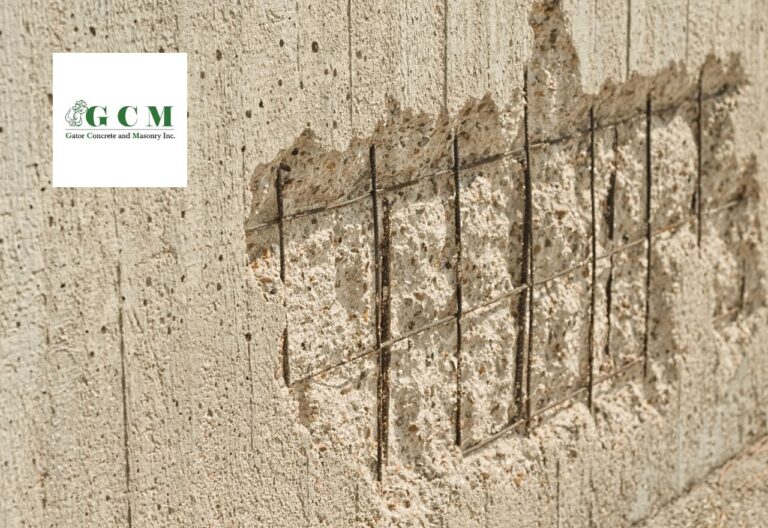
Spalling is one of the more obvious failures. When it shows up, you’ll know. Pieces of concrete start breaking off, sometimes small, sometimes big enough to expose what’s underneath.
Most of the time, this ties back to moisture getting into the concrete and reaching the steel. Once rebar starts to corrode, it expands, and that pressure pushes outward until the surface gives.
You’ll usually notice:
- Chunks breaking off the surface
- Rust stains bleeding through
- Small cracks forming before bigger damage
It doesn’t happen overnight. There are signs… they just get ignored too often.
Why These Failures Happen in the First Place
A lot of people think these problems happen during the pour. Not really. Most of the damage starts before concrete even hits the ground.
It usually comes down to a few key areas:
- Poor subgrade preparation
- Inconsistent or rushed compaction
- Moisture issues sitting under the slab
If the base isn’t stable, nothing above it will be either. That’s just how it works.
Then you’ve got mix issues. Too much water, wrong proportions, inconsistent batching. It might make placement easier in the moment, but it weakens the concrete long term.
And timing… that’s where experience really shows.
- Finishing too early traps moisture
- Finishing too late affects bonding
- Overworking the surface seals in problems
Concrete doesn’t follow the schedule. You have to read it and adjust.
The Real Cost of Repairs (And Why They Add Up Fast)
Repairs always sound simple when they’re first brought up. Patch it, resurface it, move on.
But in the field, it rarely works like that.
Surface fixes don’t address the real problem. If the issue started underneath, it’s going to come back. And when it does, it’s usually worse.
Here’s what we see over and over:
- Patches failing within months
- Structural repairs requiring more labor and equipment
- Jobs getting delayed because of rework
And on higher-end residential builds, there’s another cost… reputation. Clients notice these things. Once trust drops, it’s hard to get it back.
Subgrade and Site Work: Where Most Problems Begin
This is where a lot of jobs go wrong, even before anyone realizes it.
The concrete is only as good as what it sits on. If the subgrade isn’t right, the slab won’t perform the way it should.
What needs to happen here:
- Proper grading to ensure drainage
- Removal of soft spots and organic material
- Compaction done in layers, not rushed
- Moisture levels controlled before the pour
Skip any of these, and you’re setting yourself up for problems later.
Placement and Finishing: Timing Is Everything
This is where the difference between an average crew and an experienced one really shows.
You can’t rush finishing. You have to watch the slab, wait for the right moment, and let the concrete tell you what it needs.
A few things that matter:
- Let bleed water come up and evaporate naturally
- Don’t seal the surface too early
- Avoid overworking the slab
Mistakes here are what lead directly to delamination and weak surfaces. And once that happens, there’s no easy fix.
Strong Concrete Starts With Smart Decisions
Spalling, scaling, delamination… none of these are random. They’re the result of decisions made early in the process.
Miss a step in prep, rush the timing, skip curing… it all adds up.
Do it right from the start:
- Prepare the site properly
- Use the correct mix
- Time your placement carefully
- Cure the concrete the way it should be done
That’s how you avoid repairs. That’s how you build something that lasts.
If you’re planning a project and want it done right from the start… not patched later… we’re ready to step in.
At Gator Concrete and Masonry Inc, we focus on what most crews overlook. Subgrade, timing, curing, details that matter.