
Quick Overview:
Soil and groundwater conditions control how structural concrete performs. This guide covers site prep, dewatering, and foundation strategies to help builders prevent settlement, cracking, and long-term failure before construction begins.
There’s a hard truth in structural concrete… most failures don’t start in the concrete. They start below it. In the soil, in the water, in the prep that didn’t get enough attention. We’ve seen it firsthand across Florida, especially in coastal and flood-prone zones where groundwater and loose soils are part of everyday construction.
This isn’t surface-level stuff. This is where structural performance is decided.
Why Ground Conditions Make or Break Structural Concrete
Failures in structural concrete often begin before the pour. It’s not the mix or the finish, it’s what the structure is sitting on.
In coastal regions, soils are often saturated, loose, or inconsistent. Add high water tables and seasonal rain, and suddenly your foundation system is dealing with movement it wasn’t designed for. Grade beams, post-tension slabs, drilled piers, these systems rely on stable support.
When that support isn’t there, you get:
- Cracking slabs
- Uneven settlement
- Structural stress
Ground conditions aren’t fixed. They change with weather, drainage, and nearby activity. That’s why early planning and proper site prep matter more than most realize. If the soil isn’t right, nothing above it will perform as intended.
Understanding Site-Specific Soil Behavior
Every jobsite is different. Even two lots side by side can behave completely differently under load.
Common soil types include:
- Sand, generally stable when compacted
- Clay, prone to expansion and shrinkage
- Organic soils, weak and unsuitable
- Fill, which may or may not be engineered
The real concern is how these soils handle weight. Bearing capacity determines whether the soil can support the structure without excessive settlement.
Settlement becomes a problem when it’s uneven. That’s where cracks and structural issues begin.
Geotechnical reports are critical here. They define soil conditions, groundwater levels, and recommended foundation systems. But they only help if they’re followed and applied properly in the field.
Bottom line, structural systems are only as reliable as the soil beneath them.
Groundwater: The Hidden Variable
Groundwater is one of the most overlooked factors in foundation performance.
In Florida, water tables shift with seasons, rainfall, and even tides. What looks like dry soil today can become saturated tomorrow.
Groundwater creates hydrostatic pressure beneath slabs and around foundations. That pressure can weaken support, increase movement, and lead to cracking over time.
It also affects construction directly. Excavations become unstable, subgrades soften, and formwork loses support.
This is where dewatering comes in. Not just removing water, but controlling it.
Common methods include:
- Wellpoint systems for shallow control
- Sump pumping for localized water
- Deep wells for larger or deeper sites
Ignoring groundwater is a risk. It leads to delays, poor soil performance, and compromised concrete placement. In coastal builds, it’s not optional. It’s expected.
Pre-Construction Site Preparation Strategies
Before concrete work begins, the site has to be properly prepared. This stage sets the tone for everything that follows.
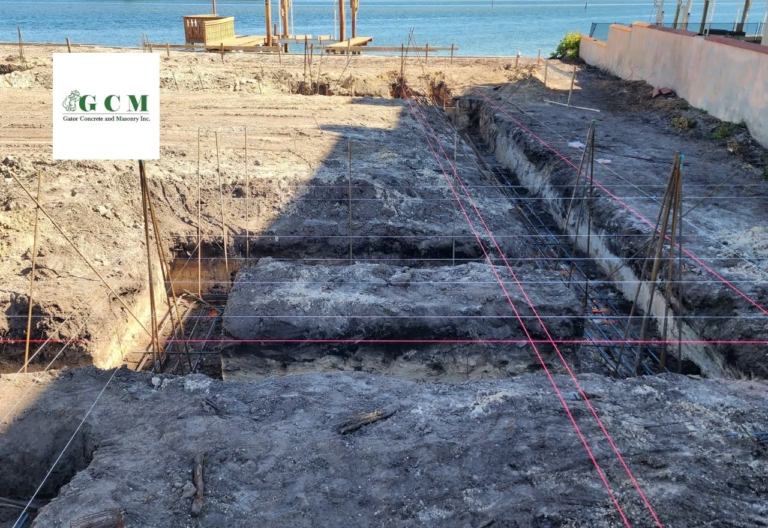
Start with clearing and grubbing. Remove vegetation, organic material, and anything unstable. In many cases, over-excavation is required to reach suitable soil.
From there, stabilization may be needed.
Common methods include:
- Compaction and proof rolling to identify weak areas
- Lime or cement treatment to improve soil strength
- Geotextiles or geogrids to reinforce weak subgrades
When replacing soil, engineered fill must be placed in controlled layers. Each lift is compacted and tested to meet required density.
Skipping these steps leads to long-term issues. We’ve seen projects where improper fill placement caused settlement months after completion.
Proper prep isn’t fast, but it prevents bigger problems later.
Dewatering Methods for Structural Concrete Work
Dewatering is often underestimated, but it directly affects both schedule and quality.
Different systems are used depending on site conditions:
- Wellpoint systems for shallow groundwater
- Deep wells for deeper water tables
- Sump pumps for small, localized control
There’s also a difference between temporary and permanent solutions. Temporary systems manage water during construction, while permanent drainage may be required for long-term performance.
Here’s the reality. Improper dewatering leads to:
- Soft, unstable subgrade
- Contaminated concrete
- Formwork failure
We’ve seen jobs delayed because water wasn’t controlled properly. Worse, we’ve seen concrete placed in poor conditions that led to early failure.
Dewatering isn’t just about keeping the site dry. It’s about maintaining structural integrity.
Foundation System Selection Based on Soil and Water Conditions
Foundation design must match actual site conditions. There’s no one-size-fits-all solution.
Shallow foundations work when soils are stable. Deep foundations are needed when surface soils are weak or groundwater is high.
Common systems include:
- Grade beams for load distribution
- Drilled piers for deeper support
- Pile systems in poor soil conditions
- Post-tension slabs to control movement
Choosing the right system requires coordination between engineers and contractors. When that coordination happens early, projects run smoother and perform better.
Coastal and Flood Zone Considerations
Building in coastal zones adds another level of complexity.
FEMA requirements often dictate:
- Elevated structures
- Freeboard above flood levels
- Open foundations to allow water flow
There’s also the risk of scour and erosion. Water movement can remove supporting soil, which means foundations must be designed to handle those conditions.
Elevated systems like piles and grade beams are common in these areas. Every detail must meet code, from elevation to reinforcement.
Coastal construction leaves little room for error. Compliance and execution both matter.
Execution and Quality Control
Even with proper design, execution is what determines success.
Before any pour:
- Inspect subgrade conditions
- Verify reinforcement placement
- Check formwork stability
Compaction testing ensures the soil meets requirements. Moisture conditioning ensures the subgrade is neither too dry nor too wet.
Contamination is another issue. Mud, standing water, or debris can weaken concrete performance.
We’ve stopped pours when conditions weren’t right. It’s better to delay than to build on a compromised base.
Common Failures from Poor Ground Management
When soil and groundwater aren’t handled properly, problems show up quickly or over time.
Common issues include:
- Differential settlement
- Slab cracking
- Heaving
- Foundation movement
- Long-term durability concerns
These failures are costly and difficult to fix. Most could have been prevented with proper site management.
Best Practices for Builders and Engineers
From years of experience, a few key practices stand out:
- Engage geotechnical engineers early
- Design based on actual site data
- Sequence excavation, dewatering, and concrete work correctly
- Work with experienced structural concrete contractors
Don’t Risk the Foundation, Work with Proven Experts
If your project involves challenging soil or groundwater conditions, especially in coastal Florida, don’t take shortcuts.
Work with a contractor who understands how ground conditions affect structural performance.
Gator Concrete and Masonry Inc. delivers foundations built on proper prep, solid coordination, and real field experience.
Let’s get it right before the concrete is even poured. Contact us today!