
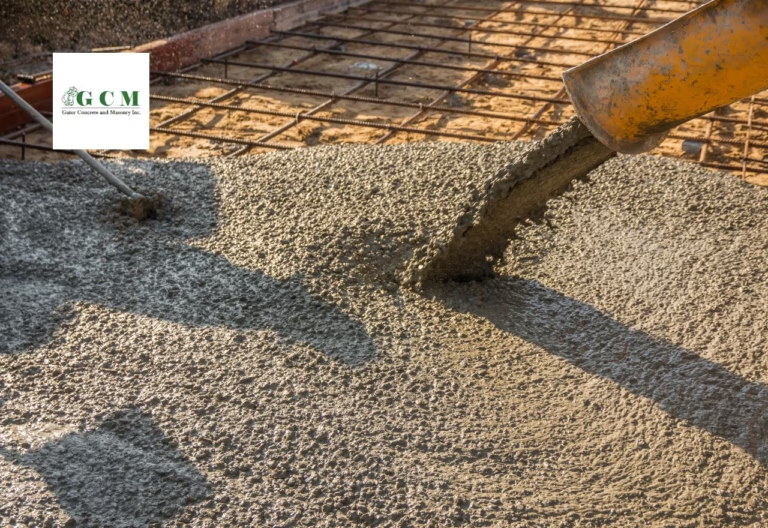
Quick Overview:
Deadlines are tight, weather is unpredictable, and owners want speed. Learn how pouring structural concrete under shorter timelines without sacrificing strength is possible through smart planning, proper mix control, solid subgrade prep, and disciplined curing, especially in Tampa’s demanding climate.
Fast Doesn’t Have to Mean Fragile
Deadlines shrink. Schedules compress. Owners push. Inspectors book tight windows. Weather changes its mind by the hour here in Tampa. That is real life in this business.
We hear it all the time. “If we pour faster, quality drops.” That’s the myth. The idea that speed and strength sit on opposite ends of the jobsite. In our experience, that thinking is what causes failure, not the timeline itself.
When you’re pouring structural concrete under shorter timelines without sacrificing strength, the answer is not cutting corners. It’s tightening systems. Pre-planning. Clear roles. No guessing.
In Florida, especially around Tampa Bay, we deal with hurricane prep schedules, afternoon storms, high humidity, and labor that gets stretched thin during peak season. That pressure can tempt crews to move too quickly. Add water to the truck. Skip a compaction pass. Shorten curing. That’s where problems begin.
Speed and strength can work together. They just need discipline. Concrete does not care about your deadline. It cares about chemistry, moisture, and proper placement. If we respect those rules, we can move fast and still deliver structural integrity that meets ACI standards and passes break tests without surprises.
Fast doesn’t mean fragile. It means controlled.
Why Structural Concrete Can’t Be Rushed the Wrong Way
Structural concrete is not decorative. It holds weight. It carries loads. It ties buildings together. Load-bearing slabs, footings, grade beams, elevated decks, CMU tie-ins. These elements are part of the skeleton. If they fail, everything above them suffers.
When timelines get tight, mistakes show up in predictable ways. We’ve seen them all.
- Poor compaction under footings
- Rebar that shifts before placement
- Crews adding water onsite to “make it easier”
- Cold joints from delayed trucks
- Incomplete vibration leading to honeycombing
Each of those shortcuts creates hidden risk.
Take poor compaction. If subgrade prep is rushed, soil settles later. The slab cracks. Doors won’t close. Now everyone’s pointing fingers. But the real issue happened before the first truck arrived.
Improper mix adjustments are another silent killer. Adding water increases slump, yes. It also increases water-cement ratio. According to American Concrete Institute guidance, higher water-cement ratios reduce compressive strength and durability. That small shortcut can cost thousands in repairs later.
Cold joints happen when placement stops too long between loads. The new concrete does not bond well to the previous layer. Structurally, that seam becomes a weakness line.
And rebar misplacement. We’ve opened up failed sections before. Bars too low, too close to the edge, not tied properly. Cover matters. Spacing matters. These are not minor details.
The long-term consequences are predictable. Cracking. Settlement. Reduced compressive strength. Warranty exposure. Costly callbacks. Liability headaches.
Structural concrete cannot be rushed the wrong way. You can accelerate the process, yes. But you cannot ignore the fundamentals. Once that truck chute swings out, there’s no rewind button.
Pre-Pour Planning: Where Speed Is Actually Won
If you want to move fast, win before the pour starts. That’s the truth.
We schedule backward from cure time. Everyone talks about 28-day strength. That’s the industry benchmark for full design strength. But we also monitor 7-day strength for early progress. Understanding the difference lets us plan framing schedules and inspections without guessing.
Planning inspections early is key. In Tampa, inspectors get booked quickly. Waiting until the last minute can delay a pour more than weather ever will. We confirm footing inspections, rebar inspections, anchor bolt layouts in advance. No scrambling.
Coordinating pump trucks and deliveries matters just as much. A late truck creates cold joints. A pump failure stalls placement. We confirm equipment, crew, and backup plans.
Then comes soil and site prep. Grading and compaction must be locked in. We check density. We condition moisture properly. Too dry, soil shifts. Too wet, it pumps under load.
Vapor barriers are placed flat, sealed at seams, protected from tears. A rushed subgrade kills strength from below. It does not matter how strong your mix is if the base fails.
Reinforcement verification is another checkpoint.
- Rebar spacing checked against drawings
- Chairs secure, bars elevated properly
- Tie wires tight
- Anchor bolts laid out and braced
We walk the site before concrete arrives. That final inspection is not optional. It’s insurance.
Pre-pour planning is where speed is earned. Once concrete flows, everything should already be decided.
Mix Design Strategies for Shorter Timelines
When pouring structural concrete under shorter timelines without sacrificing strength, mix design becomes your ally.
High early strength mixes can help. Type III cement is one option. It hydrates faster and reaches early strength sooner. Accelerators can also speed set time. But here’s the catch. They must be used properly. In hot Florida weather, too much acceleration can cause rapid set and finishing challenges.
We work closely with suppliers. We review submittals. We match mix design to weather conditions and structural requirements.
Water-cement ratio control is non-negotiable. Adding water onsite weakens concrete. Period. It increases porosity and reduces compressive strength. Instead, we use plasticizers to improve workability without increasing water content. That’s a smarter solution.
Slump management is monitored carefully. If slump is out of range, we do not guess. We address it through approved adjustments.
Air entrainment may be required in certain applications, especially where freeze-thaw cycles matter. In Tampa, freeze risk is low, but durability still counts in exposed structural work.
Admixtures can help without hurting. Set accelerators, plasticizers, water reducers. Used correctly, they support schedule. Used blindly, they create risk.
Mix design is not about making concrete easier to place. It is about balancing workability, strength gain, and durability. When done right, it allows tight timelines without compromising structure.
Pour Day Execution: Controlling the Clock
Pour day is where preparation meets reality.
Crew positioning must be defined. One team places. One vibrates. One screeds. One finishes. Everyone knows their role. Confusion wastes time and creates cold joints.
Continuous placement is the goal. Trucks scheduled tight enough to avoid gaps, but not stacked up causing delays. We coordinate with dispatch, confirm route timing, monitor weather radar.
Pumping often saves time, especially for large slabs or tight access sites. Direct discharge works on open, smaller areas. Choosing the right method affects speed and quality.
Placement sequencing matters. We avoid trapping crews in corners. We plan exit paths. We move methodically.
Vibration and consolidation are critical. Proper internal vibration removes air pockets and ensures concrete flows around rebar. Too little vibration causes honeycombing. Too much can cause segregation. It takes experience to know the difference.
We watch the mix. We watch the weather. We adjust pace without sacrificing quality. That is how you control the clock instead of chasing it.
Finishing Under Pressure
Finishing concrete too early seals in bleed water. That weakens the surface. Finishing too late creates rough texture and bonding issues. Timing is everything.
We monitor bleed water carefully. We wait for it to evaporate naturally before final finishing. That patience protects surface strength.
Joint placement strategy also matters. Control joints guide cracks to predictable lines. Expansion joints allow movement. Both must be placed correctly.
Saw-cut timing is critical. Cut too early, edges ravel. Cut too late, random cracks form. We monitor slab hardness and temperature before cutting.
Under pressure, it is tempting to rush finishing. We don’t. Surface durability affects long-term performance just as much as structural strength below.
Curing: The Most Overlooked Step in Fast Projects
Curing equals strength. That is not opinion. It is chemistry.
Concrete gains strength through hydration. Cement reacts with water. If moisture leaves too soon, hydration slows and strength drops.
Wet curing, curing compounds, cure and seal products, or blankets in temperature swings. These methods keep moisture in place.
In Tampa, heat is the main threat. High temperatures increase evaporation. Sudden rain can wash surfaces. Humidity fluctuates. We adjust curing methods to match conditions.
Skipping curing to save a day is false savings. Proper curing ensures compressive strength targets are met and surfaces resist cracking. Even on fast-track projects, we protect that phase. Always.
Inspections and Strength Verification
Cylinder testing confirms compressive strength. Break tests at 7 days give early indicators. 28-day breaks confirm design strength.
We coordinate with testing labs and structural engineers. Early loading is only allowed when strength results support it. Guessing is not acceptable.
Documentation protects everyone. Clear records of mix tickets, batch times, placement, curing methods. That paper trail matters if questions arise later.
Verification is not just about passing inspection. It is about sleeping at night knowing the structure is solid.
Risk Management: Where Contractors Lose Money
Shortcuts backfire. Hidden weaknesses show up months later. Warranty exposure drains profit.
Experienced subs protect general contractors by doing things right the first time. Clear communication. Proper prep. No last-minute improvising.
We have seen what happens when grading is ignored, when drainage is overlooked, when sand and debris remain under slabs. That is why we also offer grading, drainage systems like ADS drains and underground retention drains, demolition, block walls, tree stump removal by full dig out, site cleaning, and sand removal after storm events. The foundation starts with the ground.
Pouring structural concrete under shorter timelines without sacrificing strength is possible. It requires discipline, planning, and experience.
At Gator Concrete and Masonry Inc., we bring 20 years of structural knowledge to every project in Tampa. Foundations. Concrete. CMU block walls. Grading. Drainage. We know how to move fast without gambling on strength.
If you have a tight schedule and need it done right the first time, contact Gator Concrete and Masonry Inc. Let’s build it strong, on time, and without excuses.